
Level: A2

  • A Senseless Swap

    A Senseless Swap

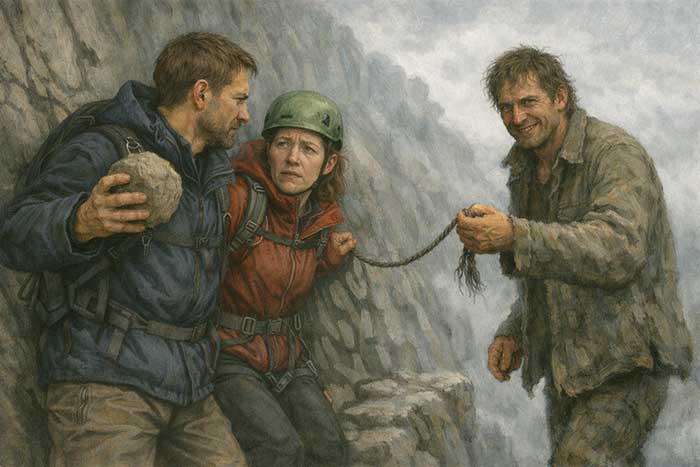
    Ann and Charles worked long hours every day, but they still had little money. Their home was a tiny one-room flat in a dirty part of the city. At the end of each month, they counted coins and worried about the rent.

    Every Sunday morning, they went to the park with their dog, Max. This was the only time they had together because of the long hours they spent at work.

    One Sunday morning, they sat on a bench and watched Max play. They were both feeling exhausted and had difficulty keeping their eyes open. Next to them on the bench, an old woman was feeding the birds. She looked at them kindly and said, “You both look tired. Life seems hard for you.”

    Ann smiled a little. “Yes, we work and work, but we never seem to have enough money.”

    The old woman nodded slowly. “I can give you something. Five million dollars. Enough to change your lives forever.”

    Charles laughed nervously. “That sounds impossible. What’s the catch?”

    The woman’s voice was calm. “It is simple. Each of you must give up one sense. You can choose which one.”

    Ann and Charles looked at her in shock. But the woman only kept feeding the birds, as if her words were normal.

    That night, they did not sleep. They thought about the money. A house by the sea, no more work, no more bills.
    Finally, Ann whispered, “I will give up smell. I can live without it.”

    Charles thought for a long time. “Then I will give up touch. It will not be too bad.”

    The next day, they went back to the park. The old woman was waiting on the same bench. She touched their foreheads gently.
    In that moment, their senses were gone.

    The money came soon after.

    At first, everything was wonderful. They bought a large house by the sea with many rooms and big windows.
    They travelled to other countries. They ate in famous restaurants and wore new clothes. Life seemed perfect.

    But soon, problems began.

    Ann could not smell the roses in the garden. She could not smell fresh bread or coffee in the morning.
    Food had no taste for her anymore. One evening, she burnt dinner because she did not smell the smoke.

    Charles could not feel Ann’s hand in his. He could not feel the warm sun or the soft sheets.
    One afternoon he cut his hand badly and did not notice until he saw the blood.

    Ann cried, “This is not life. You could die and not feel it.”

    Charles looked around at their big house. Ann looked too. They had money, cars, and everything they once wanted.
    But they both felt empty inside.

    “We are rich,” Charles said, “but we are not happy.”

    Ann nodded. “We gave away too much.”

    They went back to the park many times, but the old woman never came again. The choice was final.

    And in their fine new house, Ann and Charles realised that money cannot buy back the senses that make life real.

    📒 Key vocabulary

    • tiny – very small
    • flat – a small home, usually in a building with many homes
    • rent – money you pay to live in a flat or house
    • bench – a long seat in a park or public place
    • feed (feed, fed, fed) – give food to
    • sheets – thin covers on a bed
    • empty – with nothing inside
    • nod (nod, nodded, nodded) – move the head to show agreement
    • final – last, cannot be changed

    🤔 Comprehension quiz

    How much of this story did you understand? Test yourself with this easyEnglish quiz!
  • Freedom

    Freedom

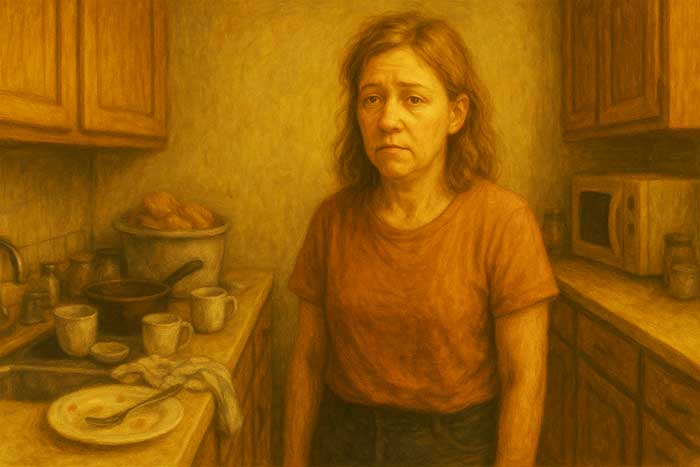
    Mr Smart liked rules. He liked quiet classrooms, clean desks, and students who did exactly what he said. The children in his class thought he was clever but also a little too strict. One Monday morning, Mr Smart surprised them. With a small smile, he said, “If everyone passes the test, you will make the rules for one whole week.”

    The classroom became noisy at once. Some students laughed, others shouted, and a few looked worried. “Really, sir? “Any rules we want?” asked one boy. “Yes,” said Mr Smart. “But remember, everyone must pass.” The students nodded. They were all excited and nervous.

    On Friday, the teacher gave back the test papers. To their amazement, every single student had passed. Some had studied hard, some were lucky, but it did not matter. A promise was a promise. Mr Smart clapped his hands. “Well done! Next week, the rules belong to you.”

    The students quickly made their list. There were only four rules: no homework, phones allowed in class, teachers must bring snacks every day, and no tests—only games. They gave the list to Mr Smart, who read it carefully and nodded. “Very well. We will follow these rules.”

    On Monday morning, the school felt like a party. Music played from someone’s phone, students ate crisps at their desks, and Mr Smart put a plate of biscuits on the table. Everyone laughed and shouted. “School is finally fun!” said one girl.

    By Tuesday, things started to change. The floor was sticky with juice, the desks were dirty with food, and many students looked tired because they had stayed up too late playing on their phones. When Mr Smart tried to speak, nobody listened. “No lessons, sir! Only games!” shouted one boy.

    By Wednesday, even the games were a problem. Students argued about who was winning, and some refused to play at all. The classroom was noisy and messy. Nobody was learning, and nobody was really happy.

    Mr Smart never raised his voice. He never stopped them. He only watched with a small smile. By Friday, the students had had enough. Their clothes were untidy, their heads hurt, and the week felt like a failure. They went to Mr Smart and begged, “Please, can we have the old rules back?”

    Mr Smart took off his glasses and looked at them. “Are you sure? You asked for freedom.” One girl said, “Yes, but too much freedom is not fun. We cannot work or even play like this.” The rest of the class agreed.

    Mr Smart smiled. “Now you see. Rules are not just to stop you having fun; they are here to protect you.” The students nodded. The old rules returned, and life in the classroom became calm again. After that week, they still complained a little when Mr Smart gave homework—but much less than they had before.

    📒 Key vocabulary

    • strict – not easy, with many rules
    • rules – things you must or must not do
    • nod (nod, nodded, nodded) – move your head in agreement
    • crisps – thin fried pieces of potato, eaten as a snack
    • argue (argue, argued, argued) talk angrily with someone
    • refuse (refuse, refused, refused) – not agree to do something
    • untidy – not neat or organised
    • failure – when something does not work or is not successful
    • beg (beg, begged, begged) – ask for something in a desperate way
    • freedom – being free, not controlled by rules

    🤔 Comprehension quiz

    How much of this story did you understand? Test yourself with this easyEnglish quiz!
  • Smart

    Smart

    John loved technology. It was all he ever talked about. He was always excited to try the latest gadgets, and whenever a new phone, watch, or computer came out, he had to be the first to have it. For John, technology made life easier and certainly more exciting.

    The house could do many things. The front door opened when it saw his face. The lights came on when he said, “Lights on.” The coffee machine made coffee when he said, “Good morning.” Even the fridge told him when he needed more milk.

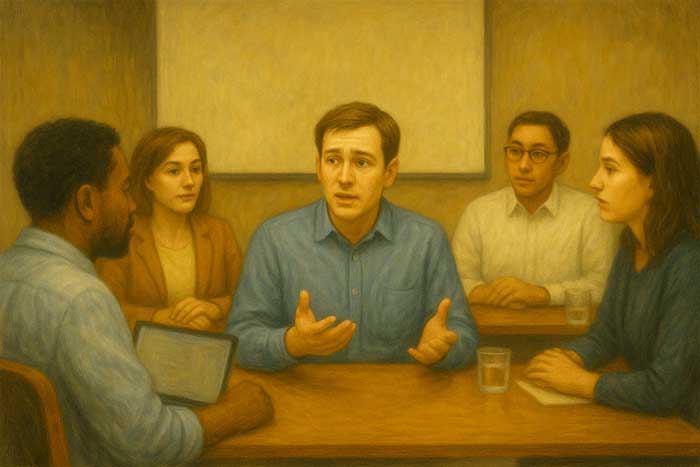
    At first, John was very happy. He told his friends, “This house is amazing. I don’t need keys, I don’t need to write shopping lists, and I don’t even need to think about many things. The house does it all.”

    But one evening, after work, something went wrong. There was a big storm. The wind was strong, and the rain was heavy. Suddenly, the whole street lost electricity. The smart home went dark and quiet.

    John stood at the front door. “Open,” he said. But the door stayed closed. He tried again, louder: “Open!” Nothing happened. The door only worked with electricity. John had no key.

    He waited, but the power did not come back. He was wet and cold outside. “Why didn’t I keep a key?” he thought.

    When the power finally returned, John ran inside. But the problems continued. The fridge was warm, and the food inside was bad. He wanted to make tea, but the electric kettle did not start. The system was not working so he could not even boil water.

    John went to take a shower, but the hot water was cold because the machine needed electricity. He tried to open the windows for fresh air, but they were locked by the smart system too.

    That night, John sat in the living room, tired and hungry. Without the smart system, the house felt useless. He remembered his old apartment with a normal key, a simple kettle, and windows he could open by hand. Life there was harder in some ways, but at least it always worked.

    The next day, John asked a worker to add a normal lock to the door. He also bought a small gas stove and a candle. His friends were surprised.

    “You love technology,” one of them said. “Why are you going back to old things?”

    John smiled. “Living in a smart home is great,” he said. “But when there is no electricity, the house cannot help me. I’ve learnt that doing things the old way is sometimes safer and more reliable. A key and a simple stove will not stop working in a storm.”

    From that day on, John continued to enjoy his smart home, but he also held on to some traditional habits too. He now realised that while technology can be incredibly useful, it also has some disadvantages.

    📒 Key vocabulary

    • gadgets – small, useful machines or tools
    • electricity – power that gives energy to lights and machines
    • kettle – a pot for boiling water
    • system – a group of machines or parts that work together
    • locked (lock, locked, locked) – close with a key or other system so it cannot be opened
    • useless – not helpful; something that cannot do what you need
    • stove – a machine used for cooking food or boiling water
    • candle – a stick of wax that gives light when it burns
    • traditional – old and simple, not modern or new
    • disadvantages – negative points, things that cause problems

    🤔 Comprehension quiz

    How much of this story did you understand? Test yourself with this easyEnglish quiz!
  • The Joker

    The Joker

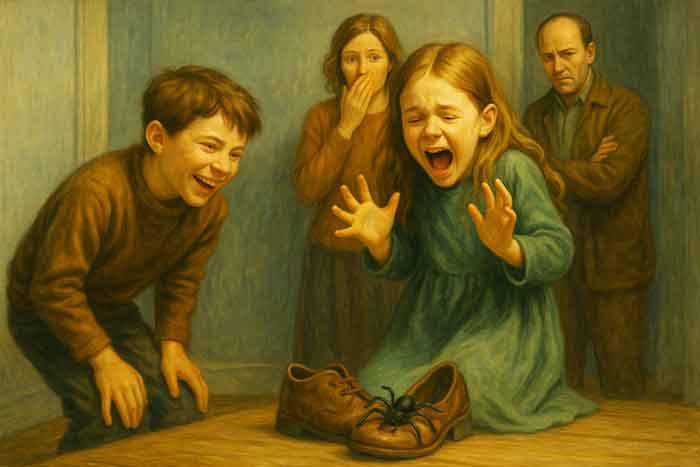
    Jack loved playing jokes more than anything else in the world. He was always looking for ways to make people laugh—or jump and scream with fright. At school, he hid behind doors to shout “Boo!” At home, he put toy spiders in his sister’s bed. At the park, he would swap footballs for water balloons and make his friends wet. Everyone called him “the joker”, and Jack was proud of the name.

    At first, his tricks were funny. People laughed, and Jack felt clever. But after a while, things changed. His sister grew tired of spiders in her shoes. His dad wanted to drink his coffee without salt in it. His mum wanted a kitchen without sudden bangs from balloons. The family had had enough.

    One evening, they sat together in the living room. “Jack thinks he is the only one who can play tricks,” said Mum. “But maybe it’s time he learnt a lesson.” Dad smiled. His sister clapped her hands. Together, they made a plan.

    The next morning, Jack woke up late. Still half asleep, he pulled on his jumper. But—surprise! The arms had been sewn closed at the ends. His hands couldn’t get through. “What’s going on?!” cried Jack. His sister was outside the door, laughing into her pillow.

    He quickly changed and ran to the kitchen for breakfast. He opened the fridge to get milk. But instead of milk, there was a big bottle filled with green water with peas floating inside. “This is disgusting!” shouted Jack. Dad hid behind the newspaper, trying not to laugh.

    Still hungry, Jack decided to leave for school. He slipped on his shoes and rushed to the front door. But after a few steps outside, he stopped. His shoes felt very cold and wet. He looked down. Both shoes were filled with ice cream—melting ice cream that felt cold and wet under his feet.

    From the upstairs window, his family burst into laughter. His sister shouted, “Now you know how it feels, Jack!” Mum took a photo as Jack stood in the garden with sticky ice cream on his socks.

    Jack wanted to be angry, but soon he started to laugh too. “Okay, okay, you win!” he said, shaking his head.

    That night, at dinner, Jack admitted the truth. “I guess it’s not so funny when you’re the one being tricked.” His family nodded, smiling. Jack promised to make his jokes kinder and more fun. From then on, he didn’t give up tricks—he just made sure everyone could laugh together.

    📒 Key vocabulary

    jokes – actions or stories that make people laugh

    swap (swap, swapped, swapped) – replace or trade

    joker – a person who likes to make jokes or play tricks

    trick – something done to surprise or fool another person

    plan – an idea of what to do

    jumper – a warm piece of clothing worn on the upper body

    sew (sew, sewed, sewn) – stitch with a needle and thread

    burst (burst, burst, burst) – suddenly start doing something strongly

    sticky – covered with a substance that stays on things it touches

    🤔 Comprehension quiz

    How much of this story did you understand? Test yourself with this easyEnglish quiz!
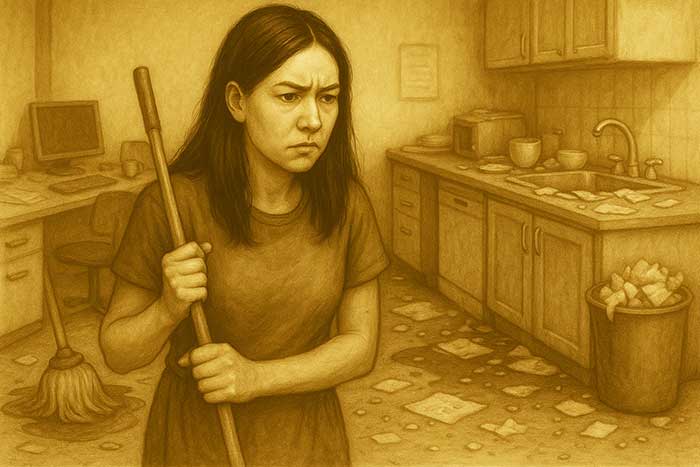
  • A Golden Opportunity

    A Golden Opportunity

    Nick had been out of work for months. Every day he sat at his old laptop, sending applications to companies that never replied. His money was almost gone, and each morning it grew harder to believe his luck would ever change.

    One day he saw an ad in the newspaper: GlobalCore Industries needs a worker. High Salary. Travel Opportunities. Start now.

    The job sounded too good to be true. Still, he decided to apply. That afternoon, a woman from GlobalCore called him and asked him to come for an interview the following day.

    When Nick arrived at the big office the next morning, the tall building looked dark. Inside, it was quiet and clean. At reception, a woman smiled and said, “Hi Nick, we’ve been waiting for you,” even though he did not give his name. Nick thought that this was very strange.

    The interview was strange. A man in a black suit asked only a few straightforward questions. He didn’t look much at Nick’s papers. At the end, he smiled coldly and said, “You are exactly what we want. Welcome to GlobalCore.”

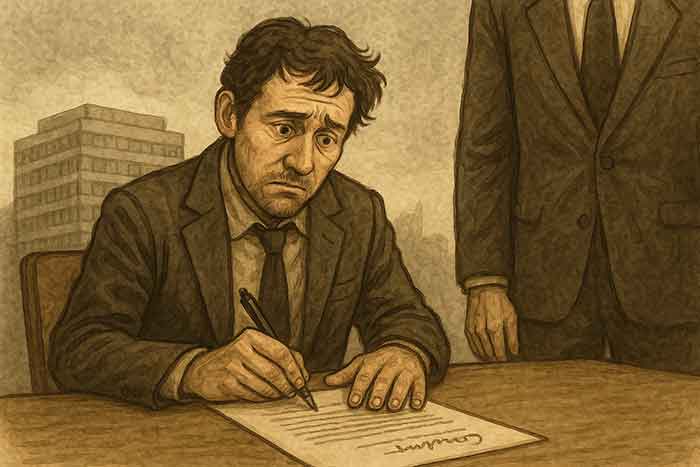
    The welcome meeting was short. A speaker talked about “a new future”, but the words were not clear. The contract worried Nick: no fixed hours; he must always be ready for work, and he must never tell anyone, even family, about his job. But the salary was very high. With nervous hands, he signed.

    On his first day, he was given an office in the basement. There were no windows, only bright lights. His job was to “translate” papers with numbers and names. They did not make sense. When Nick asked what they meant, his boss only said, “Do your job and don’t ask questions.”

    The other workers looked afraid. They spoke only in low voices. Cameras watched Nick all the time. At night, when he left the building, he saw lights still on in the top floors, with people moving inside.

    One evening, Nick found an open paper on his desk. It had names of people, cities, and countries. Some names had one word in red: “GONE”.

    Nick’s hands felt cold. Now he understood. GlobalCore was not making the world better. It was controlling it.

    The next morning, Nick tried to quit before things became more complicated. “Leaving already?” his boss asked with a thin smile.

    “I don’t think this job is for me,” Nick said.

    The man closed the door and locked it. “You don’t leave GlobalCore, Nick. You stay. You work. That is the deal.”

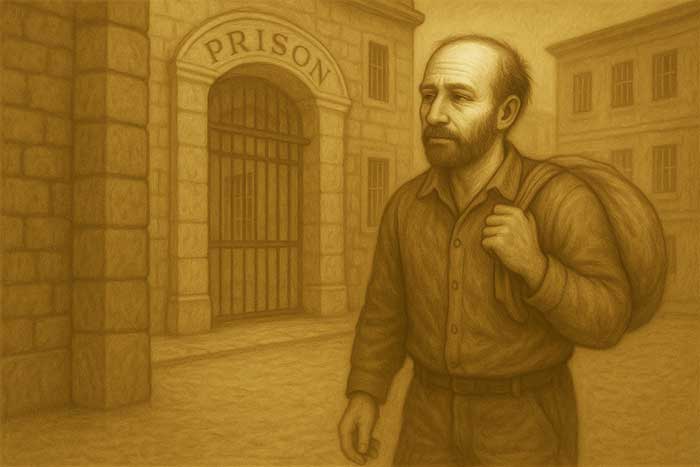
    Nick’s heart beat fast. He saw the truth: this was not a new chance. It was a prison.

    And there was no way out.

    📒 Key vocabulary

    • laptop – a small computer you can carry
    • ad – a short text that tells people about a job or product
    • salary – money you earn from your job
    • reception – the front desk in an office or hotel
    • contract – a paper you sign to agree to work rules
    • basement – the underground floor of a house or building
    • floors – levels in a building
    • quit – stop working in a job
    • lock – close something so that it cannot be opened
    • deal – an agreement between two people or groups
    • heart – the part of the body that pumps blood
    • prison – a jail; a place where people must stay as punishment

    🤔 Comprehension quiz

    How much of this story did you understand? Test yourself with this easyEnglish quiz!
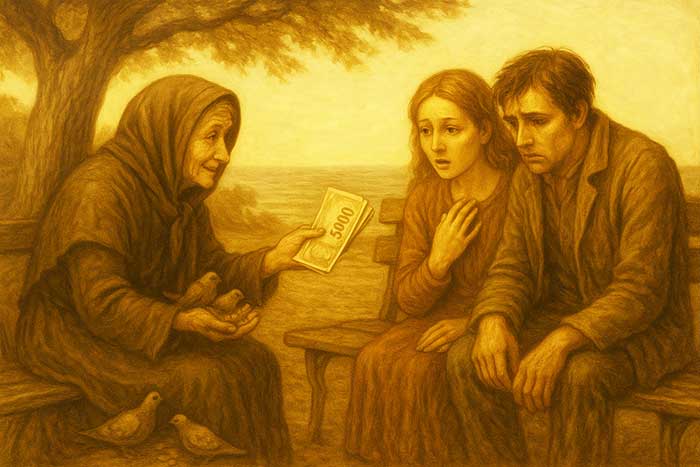
  • Wide Awake

    Wide Awake

    Fred was a busy man. He worked in an office during the day, and in the evening, he managed his own business. Fred loved swimming, reading and learning, but he never had time to do any of these things. His colleagues called him a workaholic. He laughed when they said it, but deep inside he knew it was true.

    The problem was, there were just not enough hours in the day for Fred. He often looked at the clock and wished for more time.
    ‘’If only I could stay awake,’ he said, ‘’I could do everything I want to do.’’

    One night, Fred was walking home after work. He still had a report to finish, but he was exhausted and needed his bed.

    The streets were quiet, and the air was cold. Suddenly, a man in a grey coat stepped out of the shadows. He looked serious but friendly.

    “You look tired,” the man said.

    Fred smiled weakly. “Yes. I never have enough time to do everything that I need to do. I wish I didn’t have to sleep.”

    The man reached into his pocket and showed Fred a small white pill.

    “This pill can help you. If you take it once, you will never feel tired again. You will never need to sleep.”

    Fred’s eyes grew wide. “Never?”

    “Never,” the man said. “You will have all the time you want. Day and night. You will always have the energy to do the things you want to do.”

    Fred thought about it. No sleep? That meant he could work, read, write, and learn all the time. He could finish everything he started. Life would be perfect.

    “What’s the catch?” he asked.

    The man smiled. “The catch is simple. You will never sleep again. Even if you want to. Think carefully. Life will feel very long without rest.”

    Fred looked at the pill. He remembered all the times he had fallen asleep at his desk, all the mornings when he’d felt slow and heavy. He imagined a life where he was always strong and awake.

    “Okay, I’ll take it,” he said.

    Fred paid the man, then took the pill. It tasted bitter, but he didn’t care.

    The man in the grey coat gave a short smile. “It is done.” Then he turned and walked away into the night.

    For the first few weeks, life was great. Fred worked all day, then read and did what he wanted at night. He wrote long reports for his job, learnt German and Japanese, and took up jogging and tennis. He felt powerful and laughed when his friends said they were tired.

     “I don’t sleep anymore,” he told them. “I have time for everything.”

    But weeks passed. The nights grew longer. Fred had no dreams, no soft bed, no rest. While the city slept, he walked alone through empty streets.

    Every day at the office, he finished his work faster than anyone else, but he felt strange. He missed lying in bed, closing his eyes, and letting the world go dark. He missed the small joy of waking up fresh in the morning.

    One evening, Fred sat at his desk, his eyes open wide. He was not tired, but he felt empty. He had all the time in the world, yet nothing felt right.

    He whispered to himself, “I only wanted more hours… but not like this.”

    Fred was wide awake. And he would be for the rest of his life.

    📒 Key vocabulary

    • colleagues – people one works with
    • workaholic – a person who works too much
    • awake – not sleeping
    • pill – a small piece of medicine that you swallow or eat
    • catch – a hidden problem in an offer or plan
    • rest – time to relax or sleep
    • bitter – having a strong, unpleasant taste
    • empty – with nothing inside, or feeling nothing

    🤔 Comprehension quiz

    How much of this story did you understand? Test yourself with this easyEnglish quiz!
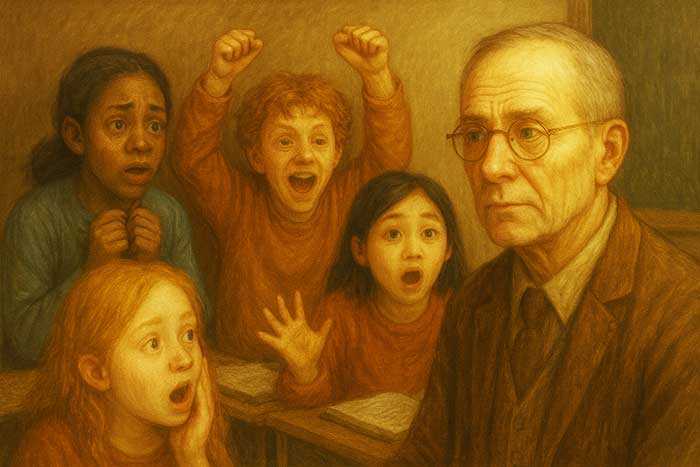
  • The Free Ticket

    The Free Ticket

    Peter lived a dull life. He was not unhappy, but every day was the same. He went to work in the same boring job he had done for 20 years, came home, ate dinner, and watched TV. Nothing exciting ever happened, and he was ready for a change.

    One morning, he opened his email and saw a message:
    “YOU have won A FREE PLANE TICKET! One seat. One adventure. One rule: you won’t know the destination until you arrive.”

    Peter didn’t remember joining a contest, but the message looked real. He smiled and said, “Why not?” Then he pressed YES.

    Two days later, Peter went to the airport. At the check-in desk, a woman gave him a small black band to wear on his arm. It had a little red light.

    “What is this?” he asked.

    She smiled. “It will guide you. Good luck.”

    He walked to Gate 19. The screen only said:
    “Flight X – Now boarding.”

    No city name. No country. Just the letter X.

    The plane was small. Only ten people were inside, and nobody was talking. Some of the passengers looked happy, while others looked quite worried.

    Three hours later, they landed on an island covered in trees. A man in a big coat met them as they got off the plane.

    “Please come,” he said.

    They got into a big car and drove through the forest. After some time, they stopped at a strange building. A sign on the wall said:
    “THE ISLAND MYSTERY GAME”

    Peter felt nervous but also excited.

    Inside, a woman gave instructions.
    “You have 48 hours to find the final key. Work alone or with others. But be careful. This island is full of surprises.”

    Peter asked, “Is this a game?”

    She smiled. “Only if you win.”

    The next couple of days were full of action. Peter climbed hills, looked inside caves, and followed maps. He joined two other people—Anna from Germany and Marco from Brazil.

    Together, they found small keys, opened boxes, and followed clues. At night, they slept in small wooden houses. Sometimes they heard strange noises.

    One night, Peter saw a message on his armband:
    “One of your team is hiding something.”

    Peter didn’t sleep much that night.

    On the second day, Peter found a gold key inside a stone. He ran to the top of a hill where a helicopter was waiting. Inside was the woman he’d met at the building two days before. She told Peter to get in.

    “You found the final key!” she said as the helicopter was leaving the ground.

    “What is this game?” Peter asked.

    “A test”, she said. “And now you have passed.”

    The helicopter flew over the forest and the sea. Peter looked at the gold key in his hand.

    “Where are we going?” he asked.

    The woman smiled. “To take you to your new job.”

    “My new job? What will I be doing?” Peter said.

    “We can’t tell you yet,” she replied. “But it will be exciting, and it will be dangerous.”

    Peter felt a mix of fear and excitement. He looked out of the window. The island grew smaller and smaller.


    He didn’t know what his new job was, but he was certain that his life would never be dull again.

    📒 Key vocabulary

    • dull – not interesting or exciting
    • destination – the place where you are travelling to
    • contest – a game or competition
    • check-in desk – place at the airport where you get your boarding pass
    • band – something you wear around your arm or wrist
    • boarding – getting on a plane or ship
    • forest – a large area with many trees
    • instructions – words telling you what to do
    • clues – small pieces of information to help you find something
    • passed – did well in a test or challenge

    🤔 Comprehension quiz

    How much of this story did you understand? Test yourself with this easyEnglish quiz!
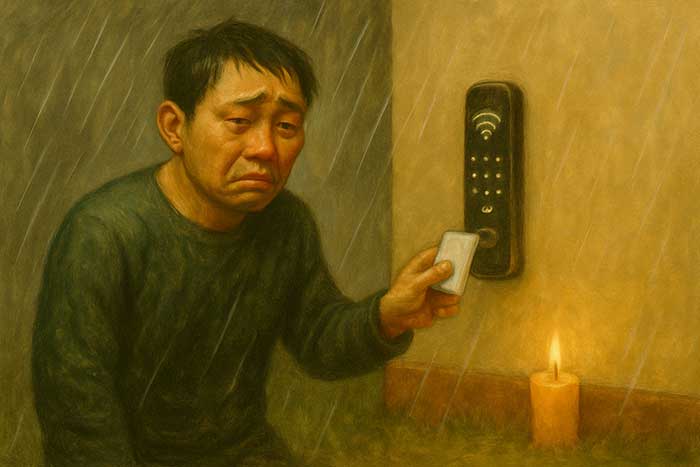
  • A Weekend in Venice

    A Weekend in Venice

    Alice arrived in Venice early on Saturday morning. The sky was grey, and the air was cool. She had one small bag with her, and she had booked a hotel near the Grand Canal.

    Alice had come to Venice for a short holiday. But she also had a job to do. In her bag was a small silver key. A man in London had told her: Take this to Venice. Give it to a woman named Sofia at midnight in St. Mark’s Square.

    All day, Alice tried to enjoy the city. She took a boat along the canals, saw the famous bridges, and ate pasta in a small restaurant. But she kept looking over her shoulder. She felt someone was following her.

    At night, the city was quiet. The streets were narrow and dark. Alice walked toward St. Mark’s Square. She felt very alone.

    When she arrived, the square was almost empty. A tall man in a black coat stood by a lamp. He was looking at her.

    Alice waited for ten minutes, but Sofia did not come. The man started walking towards her.
    “Are you Sofia?” Alice asked.
    “No,” the man said. “But I know about the key.”

    Alice stepped back. “It’s nothing important,” she said.
    “Yes, it is,” the man replied. “Give it to me.”

    Alice turned and ran. She ran through small streets and over bridges. The man followed. She could hear his footsteps getting closer.

    Suddenly, a woman appeared in front of her. She had short dark hair and a red scarf.
    “Alice?” the woman whispered.
    “Yes,” Alice said. “Are you Sofia?”
    The woman nodded. “Quick, give me the key.”

    Alice took it out of her bag and gave it to her. Sofia smiled, then disappeared into the dark.

    Alice looked behind her. The man in the black coat was gone. The square was silent again.

    Back in her hotel room, Alice sat on the bed, too scared to move. She didn’t know what the key opened. She didn’t want to know.

    Outside, she could hear a boat moving slowly through the canal. Venice was beautiful—but it felt dangerous too.

    📒 Key vocabulary

    • Venice – a city in north-eastern Italy, famous for its canals
    • Grand Canal – the main, large water street in Venice
    • coat – clothing you wear over other clothes to keep warm
    • replied – answered
    • footsteps – the sound of someone walking
    • scarf – a piece of clothing you wear around your neck
    • whispered – spoke quietly
    • nodded – moved her head up and down to show agreement

    🤔 Comprehension quiz

    How much of this story did you understand? Test yourself with this easyEnglish quiz!
  • The Passenger

    The Passenger

    It was a cold and rainy November evening. Emma sat alone on the train, tired and hungry after a long day at work. She was looking forward to getting home and relaxing in her warm apartment. The train was quiet. Only a few people were inside.

    Soon the train stopped at a small station, and a tall man in a long black coat stepped into the carriage. He wore a wide hat that hid most of his face. Slowly, he walked down the aisle and sat down in the seat across from Emma. He didn’t smile. He didn’t speak. He just stared at her.

    A couple of minutes later, the train started moving again. Outside, everything was dark. The man didn’t move. He kept looking at Emma. Emma took out her phone and pretended to text. But there was no signal. She felt alone and afraid.

    A few minutes later, the lights on the train flickered. Then the train stopped again—in the middle of the forest.

    Emma looked around. The other passengers were gone. Only she and the man were left.

    The man stood up slowly and moved towards her. Emma’s heart beat fast.

    “Don’t be afraid,” the man said in a deep voice.

    “I’m not,” Emma replied, but her voice shook.

    He opened his hand and held out a small wallet.

    “I think you may have dropped this,” he said. Emma looked down. It was hers! She had not even noticed it was gone.

    “Oh! Thank you,” she said. The man nodded and walked back to his seat.

    A few seconds later, the lights came back on. The train started moving again. Emma looked around. The other passengers were back in their seats, and the carriage was now full.

    She looked at the seat across from her, but the man had disappeared.

    Puzzled, she asked the woman next to her, “Did you see the man in the black coat?”

    The woman looked confused. “What man?”

    “The tall man who gave me my wallet,” Emma said.

    The woman looked down at her wallet. “I didn’t see anyone in a black coat. That wallet was on the floor. I picked it up and put it on the seat a few minutes ago.”

    Emma froze. “Are you okay?” the woman asked.

    Emma nodded. “Yes… I think so.”

    But she didn’t feel okay. She looked out of the window, holding her wallet tightly to her chest.

    📒 Key vocabulary

    • carriage – a part of a train where passengers sit.
    • aisle – a walkway between seats in a train, plane, or building.
    • flickered – past tense of ‘flicker’, to flash or blink unsteadily, usually used for lights.
    • shook – past tense of ‘shake,’ often used to show fear or nervousness.
    • froze – past tense of ‘freeze’, to suddenly stop moving, often due to fear or shock.

    🤔 Comprehension quiz

    How much of this story did you understand? Test yourself with this easyEnglish quiz!
  • A Holiday Adventure

    A Holiday Adventure

    Julia was tired of the city. The noise, the crowds, the busy streets—it was too much. So, when her friend Lara invited her to spend a week in a quiet seaside village, she quickly said yes.

    The village was peaceful. There were no big roads, just small houses and boats. Their holiday cottage was white, with blue windows, near the beach.

    One afternoon, Julia went for a walk alone. She followed a path near the cliffs. The sun was shining, and the sea looked beautiful. After some time, she saw a small path going down to a secret beach. She walked down carefully.

    The beach was empty. She sat on a rock and listened to the waves. Near an old boat, she found a glass bottle. Inside was a piece of paper.

    She opened the bottle and read the message. It said:

    “This place is special to me. I came here every summer when I was a child. Please take care of it. Maybe you can leave a message too.”

    Julia smiled. She took out a pen and a piece of paper from her bag. She wrote:

    “Thank you. I found peace here today.”

    She put her note in the bottle and placed it under the boat again.

    Later that evening, she told Lara about her walk and the message. They both felt happy. They promised to come back next summer—and leave another message in the bottle.

    📒 Key vocabulary

    • seaside – an area by the sea, especially a beach where people go for vacations
    • cliffs – steep rock faces, especially at the edge of the sea
    • peaceful – calm, quiet, and without disturbance
    • bottle – a container, typically made of glass, used for storing liquids or small items
    • message – a written or spoken communication

    🤔 Comprehension quiz

    How much of this story did you understand? Test yourself with this easyEnglish quiz!