
Level: A2

  • His Other Life

    His Other Life

    American accent

    Janet had been married to Greg for six years. They lived in a small house with their five-year-old son Leo and a black cat named Ben. Their life looked normal and joyful. Greg worked for a technology company and travelled a lot for work. Most weeks he was away for at least two or three nights.

    “Another work trip,” Greg said one morning while putting clothes into his bag. Janet kissed him goodbye. Leo waved from the sofa. “Bring me chocolate!” Leo said. Greg smiled. “I will.” For many years Janet never asked questions.

    One evening something strange happened. Greg had just returned from a three-day trip. Janet was washing his shirts when she found a small shop receipt in one of his pockets. The shop was in another part of the city. The time on the receipt was 7:10 p.m. the evening before.

    Janet frowned. Yesterday Greg had called her from the airport. “I’m still waiting for my flight,” he had said. Janet looked at the receipt again. Then she placed it on the kitchen table. Maybe it meant nothing.

    But two weeks later something else happened. Greg was in the shower, and his phone was on the kitchen table. The screen lit up with a message. Janet did not want to read it, but she did. The message said: “Emma keeps asking when you will come home.”

    Janet stared at the phone. Emma? She did not know anyone with that name. When Greg returned to the kitchen, Janet said nothing. But now she began to watch him more carefully.

    A few days later Greg left again for another “work trip”. The next afternoon Janet drove to the address from the receipt. The street was quiet, with small houses and trees. Janet parked her car and waited.

    After some minutes she saw a car turn the corner. It was Greg’s car. He stopped in front of a yellow house. A woman opened the door and Greg kissed her. Then a small girl ran outside. “Daddy!” the girl said. Greg picked her up and carried her inside. The door closed.

    Janet sat in her car for a long time. Then she drove home. Now she knew the truth.

    A week later Janet returned to the yellow house and knocked on the door. The woman opened it and looked at her with surprise. “Yes?” Janet spoke calmly. “Hello. I’m looking for Greg.”

    The woman shook her head. “No, Greg lives here. My husband’s name is Daniel.” Janet nodded slowly. “My husband says his name is Greg.” For a moment the two women looked at each other. Then Janet said quietly, “I think we have the same husband.”

    An hour later they were sitting together in the living room. They showed each other photos and talked about dates and trips. Everything was the same. Two homes. Two wives. Two children. One man.

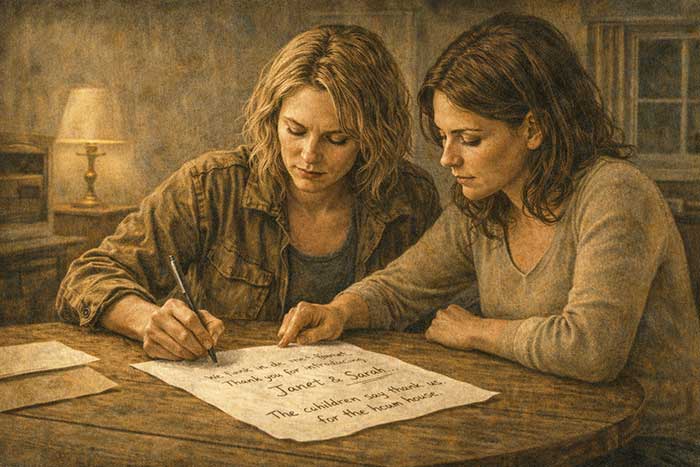
    At first both women felt angry. But slowly another idea began to grow. “Why should he keep everything?” Sarah said. Janet looked at her. “You mean the houses? The money?” Sarah smiled a little. “Exactly.”

    So, the two women made a quiet plan. Over the next few weeks they worked together. Janet moved the money from the bank account she shared with Greg. Sarah did the same. They sold Greg’s expensive watch, his computer, and even his car. They cancelled his credit cards.

    Then one evening Greg came home. The house was empty. The television was gone. His computer was gone. The kitchen table was gone.

    On the wall there was only one piece of paper. Greg walked closer and read the message: ‘We finally met. Thank you for introducing us.” Below the message were two names: Janet and Sarah. At the bottom was one more line: “The children say thank you for the new house.”

    Greg stood alone in the empty room. For six years he had lived two lives. Now he had none.

    📒 Key vocabulary

    • trip – a journey when you go somewhere and then come back
    • receipt – a small piece of paper from a shop that shows what you bought and how much you paid
    • pockets – small cloth spaces in clothes where you can keep things like money or keys
    • lit up (light up, lit up, lit up) – suddenly turn on and become bright
    • parked (park, parked, parked) – stop a car and leave it in one place
    • corner – the place where two streets meet
    • plan – an idea about what you want to do and how you will do it
    • shared (share, shared, shared) – when two or more people use or have something together (for example a bank account)

    🤔 Comprehension quiz

    How much of this story did you understand? Test yourself with this easyEnglish quiz!
  • The Guest She Never Met

    The Guest She Never Met

    American accent

    Emma lived alone in an apartment in the city. It was quiet, close to her office, and the perfect size for just one person.

    Every evening was almost the same. She ate dinner, washed her dishes, and watched TV. She went to bed early and slept with the light off. She did not think about danger. She did not think about other people. Nothing ever changed there, and that made her feel safe.

    One morning, Emma noticed something strange.

    Her cup was on the table. She was sure she had left it by the sink the night before. Emma stopped and looked at it for a moment. She tried to remember, but she couldn’t think properly.

    She did not worry about it for long because she needed to go to work.

    That night, Emma woke up for no clear reason. The room felt different. The air felt heavy. She stayed in bed and listened. Everything was quiet.

    She turned on the light. The room looked normal.

    Days passed. Small things changed. A chair was not in the right place. A door was not fully closed. Emma noticed, but she said nothing. She told herself she was tired.

    Then food started to disappear.

    She bought bread. The next day, there was less. She bought cheese. Part of it was gone. Emma lived alone. She locked the door every night. She checked it twice before bed.

    Emma began to feel nervous. She woke up more often at night. She listened to every sound. Sometimes she heard soft noises, but she could not tell where they came from.

    One night, Emma woke up and did not move.

    She heard breathing.

    It was close.

    Emma stayed very quiet and listened. After a long time, the breathing stopped.

    She turned on the light.

    No one was there.

    The next morning, Emma called the police. They came and looked around the apartment.

    “We don’t see a problem,” one officer said.

    Emma wanted to believe him, but she did not feel calm.

    After that, things got worse.

    She came home one evening and smelt soap. It was not the soap she used, and the smell was very strong. Everything else in the apartment was normal, but something felt wrong. She left at once and slept at her sister’s house.

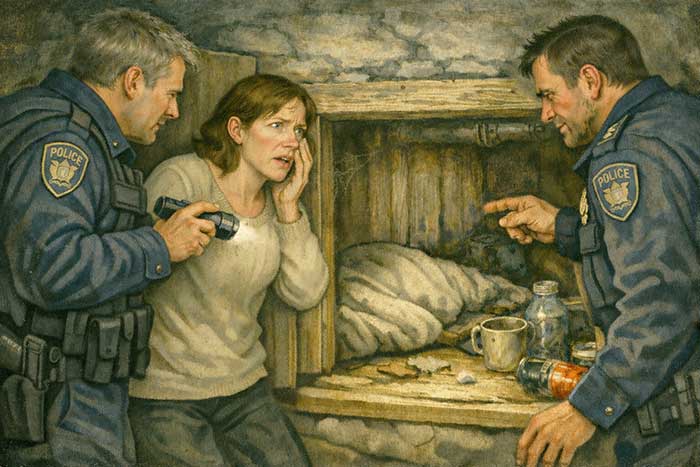
    The next day, she came back with the police.

    This time, they looked more carefully. One officer touched the wall near the hallway. It made a strange sound.

    He pushed.

    Part of the wall moved.

    Behind it was a small room. It was just long enough for a person to lie down in. There was a blanket. Empty food boxes. A cup. It looked like someone had been sleeping there for a long time.

    Emma felt sick.

    “Someone has been living here,” the officer said.

    The police ran outside. They checked the building. They checked the street.

    No one was found.

    Later, the police told Emma that they had seen many cases like this in the area. Other homes. Other people. The same story. Small changes. Quiet nights. A small room inside the home.

    Each time, the person left before the police arrived.

    Emma moved away soon after.

    She does not live alone now. She keeps the lights on at night. She listens carefully.

    Because she knows quiet does not always mean empty.

    📒 Key vocabulary

    • noticed (notice, noticed, noticed) – see or feel something and think about it
    • strange – not normal, hard to understand
    • sink – a large open container in a kitchen that fills with water to wash dishes in
    • locked (lock, locked, locked) – close something securely with a key
    • breathing – air going in and out of the body
    • worse – more bad than before
    • soap – used to clean the body or hands
    • hallway – long space inside a home between rooms
    • blanket – cloth used on a bed to keep warm
    • empty – with nothing inside
    • cases – incidents or situations under official investigation by the police

    🤔 Comprehension quiz

    How much of this story did you understand? Test yourself with this easyEnglish quiz!

  • The Climb

    The Climb

    American accent

    Elena and Mark began their climb early in the morning. The sky was dark, and the wind was cold and strong. They walked slowly and checked their bags many times. Both of them had climbed before, but this mountain felt wrong.

    After an hour, Elena stopped.

    “Mark,” she said softly. “I feel like someone is watching us.”

    Mark looked behind them. There was only rock, cloud, and empty space.

    “We are alone,” he said, but his voice was not strong.

    They walked higher. The path became narrow. Rock was on one side. Open space was on the other. Elena stayed close to the wall. Then she saw marks on the ground.

    Footprints,” she said. “They are not ours.”

    Mark looked at them and said nothing. They walked faster.

    Soon, they heard a sharp sound. A stone hit the ground behind them. Elena turned fast.

    A man stood below them.

    He looked up. He did not speak. He picked up another stone and dropped it. The stone fell past them and disappeared.

    “Hey!” Mark shouted. “Stop that!”

    The man smiled and walked away into the cloud.

    Elena felt cold inside. “I don’t feel safe,” she said.

    “We must keep going,” Mark answered.

    The wind grew stronger and it started to snow. Then the path became very narrow. Only one person could pass at a time. Mark went first. Elena followed.

    Suddenly, they felt something pull their rope.

    “Elena!” Mark shouted.

    She looked down. The rope was moving. Someone was pulling it from behind.

    The man stepped out of the cloud.

    “You should not hurry,” he said calmly.

    Mark turned. “Let go of the rope!”

    The man did not answer. He pulled again. Elena lost her balance and screamed.

    Mark moved fast. He cut the rope with his knife.

    Elena fell to her knees but stopped near the wall. She was now too scared to move.

    The man stepped closer. “That was dangerous,” he said, smiling.

    Mark picked up a stone and held it high. “Move back,” he said.

    The man stopped. He looked down at the open space beside them. Then he looked at Mark.

    “You won’t throw it,” he said.

    Mark threw it.

    The stone hit the man’s shoulder, and he cried out and stepped back. Then Elena and Mark watched in terror as he fell off the edge of the path and down the side of the mountain. When they looked again, they saw him lying on the ground, far, far below them. He did not move.

    Mark and Elena did not wait. They turned and went down the mountain as fast as they could. They did not stop until they were far away.

    Later, when they were back at their hotel, Elena began to cry.

    She knew one thing now.

    The real danger was not the mountain; it was the man who was now lying in the snow.

    📒 Key vocabulary

    • climb – an activity where you go up something high
    • cloud – a mass of white or grey air in the sky
    • path – a trail which you can walk on
    • narrow – with little space
    • footprints – marks made by feet or shoes on the ground
    • stone – small hard rock
    • rope – a long, strong line
    • let go of – stop holding
    • terror – intense fear
    • edge – the place where something ends

    🤔 Comprehension quiz

    How much of this story did you understand? Test yourself with this easyEnglish quiz!
  • The Mother

    The Mother

    American accent

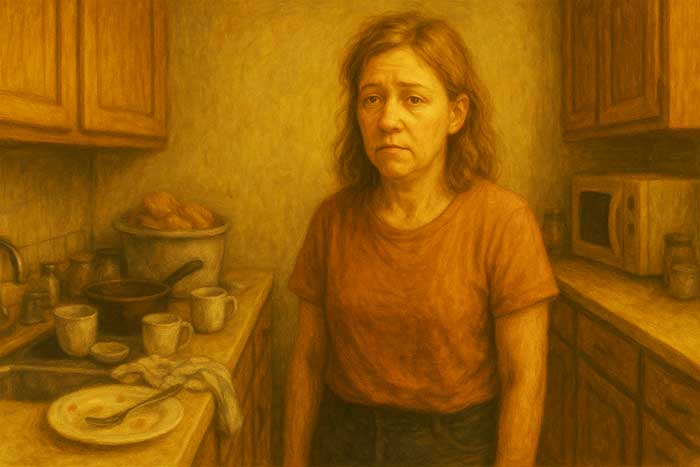
    Sally was a hard-working mother. She lived in a small house with her husband, Tom, and their two teenage children, Amy and Jack. Sally loved her family very much, but they were lazy. Every day she cooked, cleaned, washed clothes, and did the shopping, but none of the family helped. Tom sat on the sofa watching TV, Amy stayed in her room with her phone, and Jack played games for hours. They expected her to do everything and never thanked her.

    One morning, Sally woke up and felt something change inside her. She looked around the messy kitchen. There were dirty plates everywhere, the rubbish bin was full and there were clothes on the floor. Sally sighed and said softly, “Enough. I am not their servant.” She smiled to herself. She had an idea.

    She made breakfast as usual, but she did not clean anything. When Tom came in, he said, “Sally, where are my clean shirts?” Sally smiled. “I don’t know,” she answered. “Maybe you can find them.” Tom looked confused, but he said nothing.

    Amy came into the kitchen next. “Mum, why is there no clean bowl for my cereal?” she asked. “Because I didn’t wash it,” Sally said. “You can wash one yourself.” Amy looked shocked. She had never washed a dish before.

    Then Jack shouted from the living room, “Mum! Why is my schoolbag still dirty?” Sally walked to him and said calmly, “Because you didn’t clean it.” Jack opened his mouth, but no words came out.

    The house became very quiet. Sally took her bag, put on her coat, and said, “I’m going out. I will be back later. There is food in the fridge if you want to cook.” Her family stared at her in surprise.

    Sally left the house and went for a long walk in the park. She enjoyed the cool air and the sound of birds. For the first time in years, she felt relaxed. She sat on a bench and watched people walking their dogs. She smiled. “They need to learn,” she thought.

    At home, Tom, Amy, and Jack looked around the messy rooms. Tom said, “We should do something.” Amy nodded. “Mum works so hard. Maybe we should try.” Jack sighed but agreed.

    They started slowly. Tom washed the dishes while Amy cleaned the kitchen table. Jack picked up clothes and put them in the washing machine. They worked for a long time, and soon the house looked much better.

    When Sally returned home, she opened the door carefully. She expected a disaster. But instead, she saw a clean floor and a tidy kitchen. Her family stood together, looking nervous.

    Tom said, “We are sorry, Sally. We didn’t see how much work you did. We want to help now.”

    Amy stepped forward. “We made dinner.”

    Jack nodded. “And I cleaned my room.”

    Sally felt warm inside. She smiled and hugged them. “Thank you,” she said. “From now on, we work together.”

    And they did. The house became a happier place, not because it was clean, but because everyone helped and respected the mother who had taught them an important lesson.

    📒 Key vocabulary

    • messy – not clean or tidy
    • rubbish – trash; things to throw away
    • servant – a person who works for others in a house
    • shocked – very surprised
    • stared (stare, stared, stared) – look at someone for a long time
    • nodded (nod, nodded, nodded)- move the head up and down to say ‘yes’
    • hugged (hug, hugged, hugged)- hold someone in your arms
    • respected (respect, respected, respected) – treat someone well and value them

    🤔 Comprehension quiz

    How much of this story did you understand? Test yourself with this easyEnglish quiz!

  • Too Busy

    Too Busy

    Tom Parker always said he was busy. He said it many times each day.

    Whenever a coworker asked him how he was, he always gave the same answer: “Oh, I’m very busy. I have so many things to do. More than anyone else!”

    Tom liked to say this because it made him feel important.

    At work, Tom walked very fast. He wanted people to think he had no time to stop. When someone asked, “Can you help me with this?” he quickly said, “No, I’m too busy.” When people invited him to lunch, he said, “No time. I have work.”

    But Tom did not really have a lot of work. He just liked people to think he did.

    One Monday morning, Tom entered the office and said loudly, “What a busy day! I am the busiest person here!”

    His coworker Anna looked at him and asked, “What do you have to do today?”

    Tom opened his computer. He saw only two small tasks. They were easy and not important. He felt a little strange, but he still said, “Oh, many things. Too many to explain.”

    Anna only said, “Okay,” and went back to her desk.

    At lunchtime, several coworkers walked past Tom’s desk.

    “Tom, we’re going to lunch. Do you want to come?” Anna asked.

    Tom wanted to say yes, but he didn’t want people to think he had spare time. So he said his usual words: “Sorry, I’m too busy.”

    After everyone left, Tom ate a small sandwich alone at his desk. It did not feel good. He looked at the empty office and felt a little sad.

    On Wednesday, there was a team meeting. Tom told everyone, “I can’t go. I have too much work.”

    Later that day, his boss came to talk to him.

    “Tom,” she said, “I checked your work. You are not behind. You have time for the meeting. Why do you keep saying you are too busy?”

    Tom sat quietly for a moment. Then he said, “I… I don’t know. I guess I want people to think I am important.”

    His boss spoke gently. “Being busy does not make you important. Working together with others does. Talking to people and helping them does.”

    Tom did not know what to say, but he understood her words.

    That night, Tom lay in bed and thought about his week. He thought about all the times he said, “I’m too busy.” He thought about eating alone. He thought about Anna and the other workers going to lunch without him. He finally understood something: saying he was busy all the time did not make his life better. It only pushed other people away.

    The next morning at work, Tom tried something new. He walked at a normal speed. He smiled a little.

    When Anna passed by, he said, “Good morning.”

    She smiled. “Good morning.”

    Then Tom said, “If you and the others go to lunch today… can I come too?”

    Anna looked happy. “Yes, of course. We would like that.”

    Tom felt warm inside. Not because he was “important”, but because he was included.

    From that day on, Tom tried to stop saying he was too busy. He learnt that having time for people made his days better. He felt lighter, friendlier, and not alone anymore.

    📒 Key vocabulary

    • coworker – a person who works with you
    • invited (invite, invited, invited) – ask someone to come with you
    • tasks – jobs or pieces of work you need to do
    • explain (explain, explained, explained) – tell someone clearly so they can understand
    • meeting – a time when people come together to talk about work
    • boss – a person of authority in a workplace
    • gently – in a soft and kind way
    • speed – the rate at which you do something
    • included – being part of a group or activity

    🤔 Comprehension quiz

    How much of this story did you understand? Test yourself with this easyEnglish quiz!
  • A Fresh Start

    A Fresh Start

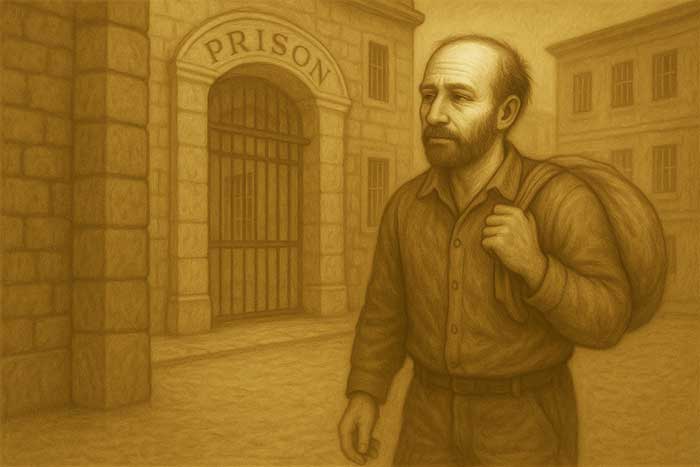
    Mike walked out of the prison gates. The sky was blue, and the sun was shining. The world looked the same as he remembered it, but for him, everything felt new. After ten long years inside, he was finally free.

    In prison, Mike had changed. He had worked in the kitchen and read many books. He had learned how to stay calm and be patient. He told himself again and again, “When I go out, I will live a good life.”

    At first, he was full of hope. He went to many places and asked for work. He wanted to cook, clean, do anything. But people always asked about his past.

    “Have you ever been in trouble with the police?” they said.

    Mike told the truth. Every time, they said they would call him, but they never did. After a few weeks, he had no money left. He stayed in a small room near the bus station and ate bread and soup.

    He started to feel sad again. Sometimes, he thought about giving up. But he remembered the books he read — books about people who didn’t stop trying. So every morning, he got up and tried again.

    One day, he walked past a bakery. The smell of bread made him stop. Inside, a woman was working. Mike asked, “Do you need help?”

    She looked at him. “Maybe,” she said. “Have you worked in a bakery before?”

    “I worked in a kitchen,” he said. “In prison.”

    The woman looked away. “I’m sorry,” she said softly. “Not today.”

    Mike thanked her and walked out. His heart felt heavy, but he didn’t get angry. He knew people were afraid.

    That afternoon, something happened. Mike was walking down the main street when he heard a loud crash. Two cars had hit each other. Smoke came from one of them.

    People stood and watched, but no one moved. Mike ran to the car. Inside was a woman screaming. The door wouldn’t open. Mike pulled hard until it opened, then helped her get out. Crying, she said, “Thank you! You saved me!”

    Soon, the police and ambulance came. A police officer asked, “What’s your name?”

    “Mike Harris,” he said.

    The next day, the story was in the local newspaper: “Man Helps Woman After Street Accident.”

    When people found out Mike had just come out of prison, they were surprised — but also impressed. The bakery woman came to see him.

    “You were brave,” she said. “Would you still like to work for me?”

    Mike smiled. “Yes. Thank you.”

    He started work the next day. He cleaned, baked, and learned how to make bread. The pay was not much, but it was honest work.

    Every morning, he watched the sun rise over the town. He was tired but happy. Life was not easy, but it was real.

    Mike was finally back to reality — and this time, he was ready for it.

    📒 Key vocabulary

    • prison – a place where people stay as punishment for a crime
    • gates – parts of a fence or outside wall that open and close
    • in trouble – in a position where someone in authority is angry with you
    • bakery – a shop selling bread
    • crash – a loud noise made when two things hit each other, like cars
    • smoke – grey air that comes from fire or something burning
    • ambulance – a special car that takes sick or hurt people to hospital
    • impressed – feeling respect or surprise because someone did something good
    • brave – not afraid to do something dangerous or difficult
    • rise (rise, rose, risen)– go up

    🤔 Comprehension quiz

    How much of this story did you understand? Test yourself with this easyEnglish quiz!
  • The Cleaner

    The Cleaner

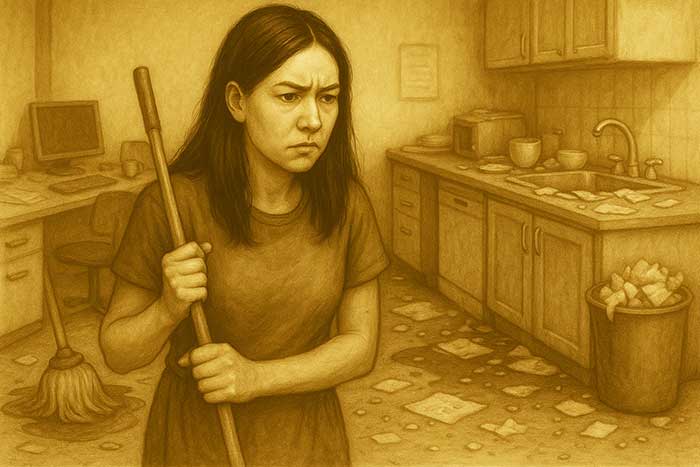
    Rita worked as a cleaner in a big office in the city. Every morning, she arrived before the sun came up and started her long day of work. The rooms in the building were quiet at that time, and the air was still pleasantly cool. She cleaned the desks, the floors, and the kitchen, and when she had finished doing that, she emptied the bins and washed all the cups that people left behind.

    When the workers came in, everything was always bright and tidy — but nobody thanked her. They talked to each other and ignored her. They left food on the tables, dropped paper on the floor, and never said hello. Occasionally they laughed when she worked. “You missed a spot,” one man said one day. Rita smiled, but she felt hurt inside.

    One morning, after a night of heavy rain, the office looked terrible. Footprints covered the floor. Coffee had spilt across a desk. The kitchen was dirty, with plates and cups everywhere. Rita looked around and felt tired. She had cleaned this office for years, and nothing ever changed.

    So that morning, she made a choice. She put her cleaning things away and sat down for a few minutes. Then she went home early.

    The next day, the office looked the same as before — messy and dirty. The workers came in and stopped at the door.

    “What happened?” one woman asked.
    “Where’s Rita?” said another.

    The place smelt bad. The tables were sticky. The bins were full. Nobody wanted to sit down or make coffee. People started to complain. “This is awful,” one man said. “How can we work like this?”

    They had never seen the office dirty before. Now they realised how much work Rita did every single day.

    When Rita came in later, everyone turned to look at her. She stood by the door with her cleaning trolley and smiled.

    “Looks like you’ve had a busy morning,” she said quietly.

    The manager walked over to her. “Rita,” he said, “we’re sorry. We didn’t see how much you do for us.”

    Rita nodded. “It’s all right,” she said. “Maybe now you do.”

    That evening, some of the workers helped her clean. They picked up papers, washed the cups, and wiped the tables. They saw how hard it was to make everything clean again.

    After that day, things were different. The workers tried to keep their desks tidy. They said hello when Rita arrived. Sometimes, they even thanked her.

    Rita still worked early and left late, but she felt better. Now people saw her — really saw her — and she smiled as she worked.

    📒 Key vocabulary

    • cleaner – a person whose job is to clean places
    • bin – a container for rubbish
    • tidy – clean and organised
    • ignore (ignore, ignored, ignored) – not pay attention to someone
    • miss (miss, missed, missed) – not notice or reach something
    • spill (spill, spilt, spilt) – make liquid fall or run out by mistake
    • sticky – not clean and a little wet, so things stay on it
    • trolley – a small cart used to carry cleaning tools
    • wipe (wipe, wiped, wiped) – rub with a cloth to make clean

    🤔 Comprehension quiz

    How much of this story did you understand? Test yourself with this easyEnglish quiz!

  • A Senseless Swap

    A Senseless Swap

    Ann and Charles worked long hours every day, but they still had little money. Their home was a tiny one-room flat in a dirty part of the city. At the end of each month, they counted coins and worried about the rent.

    Every Sunday morning, they went to the park with their dog, Max. This was the only time they had together because of the long hours they spent at work.

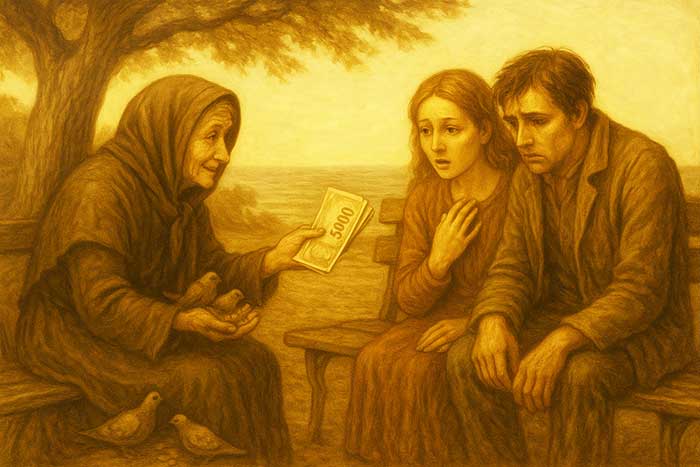
    One Sunday morning, they sat on a bench and watched Max play. They were both feeling exhausted and had difficulty keeping their eyes open. Next to them on the bench, an old woman was feeding the birds. She looked at them kindly and said, “You both look tired. Life seems hard for you.”

    Ann smiled a little. “Yes, we work and work, but we never seem to have enough money.”

    The old woman nodded slowly. “I can give you something. Five million dollars. Enough to change your lives forever.”

    Charles laughed nervously. “That sounds impossible. What’s the catch?”

    The woman’s voice was calm. “It is simple. Each of you must give up one sense. You can choose which one.”

    Ann and Charles looked at her in shock. But the woman only kept feeding the birds, as if her words were normal.

    That night, they did not sleep. They thought about the money. A house by the sea, no more work, no more bills.
    Finally, Ann whispered, “I will give up smell. I can live without it.”

    Charles thought for a long time. “Then I will give up touch. It will not be too bad.”

    The next day, they went back to the park. The old woman was waiting on the same bench. She touched their foreheads gently.
    In that moment, their senses were gone.

    The money came soon after.

    At first, everything was wonderful. They bought a large house by the sea with many rooms and big windows.
    They travelled to other countries. They ate in famous restaurants and wore new clothes. Life seemed perfect.

    But soon, problems began.

    Ann could not smell the roses in the garden. She could not smell fresh bread or coffee in the morning.
    Food had no taste for her anymore. One evening, she burnt dinner because she did not smell the smoke.

    Charles could not feel Ann’s hand in his. He could not feel the warm sun or the soft sheets.
    One afternoon he cut his hand badly and did not notice until he saw the blood.

    Ann cried, “This is not life. You could die and not feel it.”

    Charles looked around at their big house. Ann looked too. They had money, cars, and everything they once wanted.
    But they both felt empty inside.

    “We are rich,” Charles said, “but we are not happy.”

    Ann nodded. “We gave away too much.”

    They went back to the park many times, but the old woman never came again. The choice was final.

    And in their fine new house, Ann and Charles realised that money cannot buy back the senses that make life real.

    📒 Key vocabulary

    • tiny – very small
    • flat – a small home, usually in a building with many homes
    • rent – money you pay to live in a flat or house
    • bench – a long seat in a park or public place
    • feed (feed, fed, fed) – give food to
    • sheets – thin covers on a bed
    • empty – with nothing inside
    • nod (nod, nodded, nodded) – move the head to show agreement
    • final – last, cannot be changed

    🤔 Comprehension quiz

    How much of this story did you understand? Test yourself with this easyEnglish quiz!
  • Freedom

    Freedom

    Mr Smart liked rules. He liked quiet classrooms, clean desks, and students who did exactly what he said. The children in his class thought he was clever but also a little too strict. One Monday morning, Mr Smart surprised them. With a small smile, he said, “If everyone passes the test, you will make the rules for one whole week.”

    The classroom became noisy at once. Some students laughed, others shouted, and a few looked worried. “Really, sir? “Any rules we want?” asked one boy. “Yes,” said Mr Smart. “But remember, everyone must pass.” The students nodded. They were all excited and nervous.

    On Friday, the teacher gave back the test papers. To their amazement, every single student had passed. Some had studied hard, some were lucky, but it did not matter. A promise was a promise. Mr Smart clapped his hands. “Well done! Next week, the rules belong to you.”

    The students quickly made their list. There were only four rules: no homework, phones allowed in class, teachers must bring snacks every day, and no tests—only games. They gave the list to Mr Smart, who read it carefully and nodded. “Very well. We will follow these rules.”

    On Monday morning, the school felt like a party. Music played from someone’s phone, students ate crisps at their desks, and Mr Smart put a plate of biscuits on the table. Everyone laughed and shouted. “School is finally fun!” said one girl.

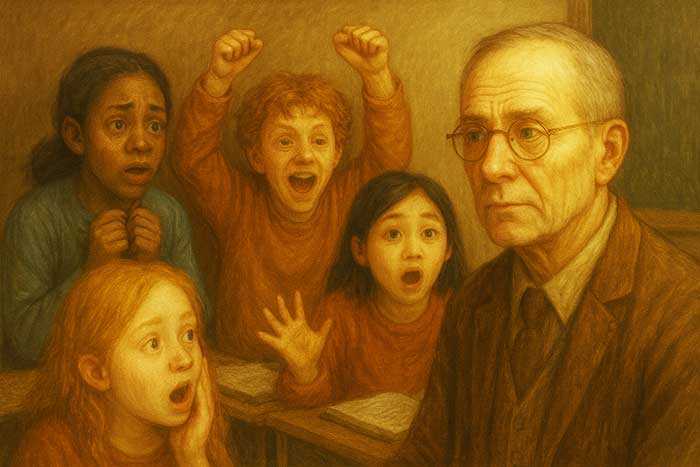
    By Tuesday, things started to change. The floor was sticky with juice, the desks were dirty with food, and many students looked tired because they had stayed up too late playing on their phones. When Mr Smart tried to speak, nobody listened. “No lessons, sir! Only games!” shouted one boy.

    By Wednesday, even the games were a problem. Students argued about who was winning, and some refused to play at all. The classroom was noisy and messy. Nobody was learning, and nobody was really happy.

    Mr Smart never raised his voice. He never stopped them. He only watched with a small smile. By Friday, the students had had enough. Their clothes were untidy, their heads hurt, and the week felt like a failure. They went to Mr Smart and begged, “Please, can we have the old rules back?”

    Mr Smart took off his glasses and looked at them. “Are you sure? You asked for freedom.” One girl said, “Yes, but too much freedom is not fun. We cannot work or even play like this.” The rest of the class agreed.

    Mr Smart smiled. “Now you see. Rules are not just to stop you having fun; they are here to protect you.” The students nodded. The old rules returned, and life in the classroom became calm again. After that week, they still complained a little when Mr Smart gave homework—but much less than they had before.

    📒 Key vocabulary

    • strict – not easy, with many rules
    • rules – things you must or must not do
    • nod (nod, nodded, nodded) – move your head in agreement
    • crisps – thin fried pieces of potato, eaten as a snack
    • argue (argue, argued, argued) talk angrily with someone
    • refuse (refuse, refused, refused) – not agree to do something
    • untidy – not neat or organised
    • failure – when something does not work or is not successful
    • beg (beg, begged, begged) – ask for something in a desperate way
    • freedom – being free, not controlled by rules

    🤔 Comprehension quiz

    How much of this story did you understand? Test yourself with this easyEnglish quiz!
  • Smart

    Smart

    John loved technology. It was all he ever talked about. He was always excited to try the latest gadgets, and whenever a new phone, watch, or computer came out, he had to be the first to have it. For John, technology made life easier and certainly more exciting.

    The house could do many things. The front door opened when it saw his face. The lights came on when he said, “Lights on.” The coffee machine made coffee when he said, “Good morning.” Even the fridge told him when he needed more milk.

    At first, John was very happy. He told his friends, “This house is amazing. I don’t need keys, I don’t need to write shopping lists, and I don’t even need to think about many things. The house does it all.”

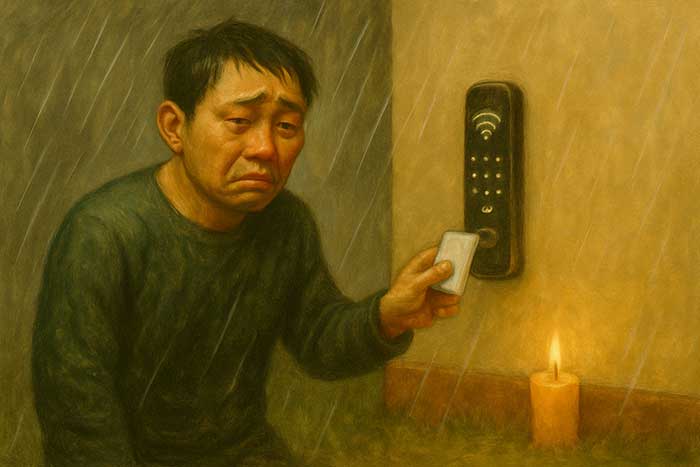
    But one evening, after work, something went wrong. There was a big storm. The wind was strong, and the rain was heavy. Suddenly, the whole street lost electricity. The smart home went dark and quiet.

    John stood at the front door. “Open,” he said. But the door stayed closed. He tried again, louder: “Open!” Nothing happened. The door only worked with electricity. John had no key.

    He waited, but the power did not come back. He was wet and cold outside. “Why didn’t I keep a key?” he thought.

    When the power finally returned, John ran inside. But the problems continued. The fridge was warm, and the food inside was bad. He wanted to make tea, but the electric kettle did not start. The system was not working so he could not even boil water.

    John went to take a shower, but the hot water was cold because the machine needed electricity. He tried to open the windows for fresh air, but they were locked by the smart system too.

    That night, John sat in the living room, tired and hungry. Without the smart system, the house felt useless. He remembered his old apartment with a normal key, a simple kettle, and windows he could open by hand. Life there was harder in some ways, but at least it always worked.

    The next day, John asked a worker to add a normal lock to the door. He also bought a small gas stove and a candle. His friends were surprised.

    “You love technology,” one of them said. “Why are you going back to old things?”

    John smiled. “Living in a smart home is great,” he said. “But when there is no electricity, the house cannot help me. I’ve learnt that doing things the old way is sometimes safer and more reliable. A key and a simple stove will not stop working in a storm.”

    From that day on, John continued to enjoy his smart home, but he also held on to some traditional habits too. He now realised that while technology can be incredibly useful, it also has some disadvantages.

    📒 Key vocabulary

    • gadgets – small, useful machines or tools
    • electricity – power that gives energy to lights and machines
    • kettle – a pot for boiling water
    • system – a group of machines or parts that work together
    • locked (lock, locked, locked) – close with a key or other system so it cannot be opened
    • useless – not helpful; something that cannot do what you need
    • stove – a machine used for cooking food or boiling water
    • candle – a stick of wax that gives light when it burns
    • traditional – old and simple, not modern or new
    • disadvantages – negative points, things that cause problems

    🤔 Comprehension quiz

    How much of this story did you understand? Test yourself with this easyEnglish quiz!