
American accent
In Stoneton, charity filled people’s diaries.
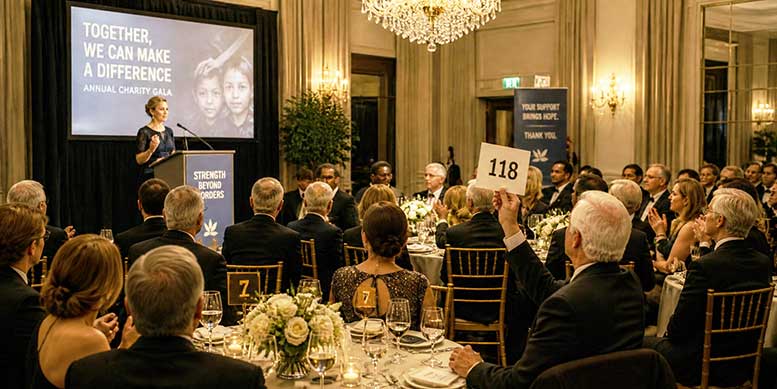
In fact, most weeks had at least one big event planned — a fundraiser, a dinner, an auction. The causes changed, but the pattern stayed the same. The women of the village knew how it worked. They met; they planned and discussed details that seemed small but somehow mattered: flowers, menus, and seating. Then came the event itself, where everything looked effortless.
They spoke about people in need with concern and seriousness. They listened to speeches, sometimes with tears in their eyes. They gave money, often quite a lot. Afterwards, there was a shared feeling that something important had been done.
It wasn’t fake. But it wasn’t simple either.
“People need awareness,” Mrs Ellington liked to say.
And awareness, in Stoneton, travelled very well across the world.
It just didn’t travel very far down the street.
Amy Carter moved into Linden Close at the start of spring. By the end of the week, everyone knew about her, even if no one had spoken to her for more than a few minutes. She rented the smallest house on the street. She had a young son. She worked long hours.
“She’s new,” Claudia said one morning.
“And very quiet,” someone replied.
Amy didn’t come to the welcome drinks that month. She didn’t show up at the next coffee morning either. In fact, she wasn’t invited.
No one made a decision about it. It just happened.
“She probably wouldn’t be interested,” Claudia said once, while putting together a guest list.
“Yes, she seems quite different,” someone replied.
And that was enough.
After that, her name didn’t come up again. When people met for coffee or organised small gatherings, they invited the same group as always. Amy simply wasn’t part of it.
It didn’t feel like exclusion. It felt normal.
Amy, for her part, carried on as usual. Mornings were rushed. Afternoons were tight. Evenings disappeared quickly. She was polite when she saw people but always in a hurry.
By summer, she had become part of the background of the village.
Then, as plans began for the biggest charity event of the year, something changed.
Amy’s son got sick.
It wasn’t serious at first, just a fever that didn’t go away. He missed school. Amy was seen more often during the day—at the pharmacy, at the shop, and always in a rush. She looked more tired each time.
“She doesn’t look well,” one of the ladies said while discussing the gala.
“She probably has a lot on her plate,” another replied.
They spoke with concern, but the conversation moved on. There were still details to sort out.
The gala was important. A disaster overseas had been in the news, and Stoneton wanted to respond. Meetings stretched longer than usual. There was talk of making this the most successful fundraiser yet.
On the night of the event, everything went smoothly.
The house was full of light and people. Music played softly. Conversations flowed. When the speeches began, the room grew quiet.
Stories were told—about loss, about rebuilding, about hope. People listened. Donations were generous.
By the end of the night, everyone agreed it had been a success.
A few streets away, Amy was sitting beside her son’s bed, checking his temperature.
No one thought about that.
A few days later, something small happened.
Mrs Dalrymple saw Amy outside her house, struggling with shopping bags. Her son stood beside her, pale and quiet.
“Let me help you,” she said.
Amy hesitated, then nodded. “Thank you.”
They walked together in silence for a moment.
“Is he alright?” Mrs Dalrymple asked.
“Getting better,” Amy said. “It’s just been a long week.”
At the door, Amy paused.
“Would you mind picking him up from school tomorrow?” she asked. “I might be late from work.”
It was a simple question.
“Of course,” Mrs Dalrymple said.
Later, she mentioned it to a neighbour. Not as gossip, just in passing. The story spread quietly.
Other details came up too. Amy had been helping an older neighbour with errands. She had stayed late at school once to tidy up. Small things, easy to miss.
At the next charity meeting, there was a pause when someone mentioned her.
“We didn’t really… include her,” Claudia said.
No one replied.
The conversation moved on, but not as easily as before.
Nothing in Stoneton changed overnight. There were still events, still meetings. But something felt slightly different.
Because it was becoming harder to ignore the gap between what they said charity was — and what it looked like when it was needed just next door.
📒 Key vocabulary
- fundraiser – an event where people collect money for a cause
- auction – a sale where people offer increasing amounts of money to buy something
- causes – important issues or problems that people support or try to help solve
- speeches – formal talks given to an audience
- awareness – knowledge or understanding of a situation or problem
- gatherings – organised events where people get together
- exclusion – the act of leaving someone out or not including them
- have a lot on one’s plate – having many responsibilities or problems to deal with (idiom)
- stretched (stretch, stretched, stretched) – very busy and having little time or energy
- struggling – having difficulty doing something
- pale – having little colour in the face, often because of illness or tiredness
- errands – small tasks or jobs, such as shopping or delivering things
🤔 Comprehension quiz
How much of this story did you understand? Test yourself with this easyEnglish quiz!


Leave a Reply