

Level: A1

  • The Woman in the Park

    The Woman in the Park

    Australian accent

    Alice walked dogs every morning. It was her job, and she loved it. She started early, before the street was light. She walked the same way every morning and went to the same park. In the evening, she did the same thing again. She knew the dogs. She knew the people. The park felt like her second home.

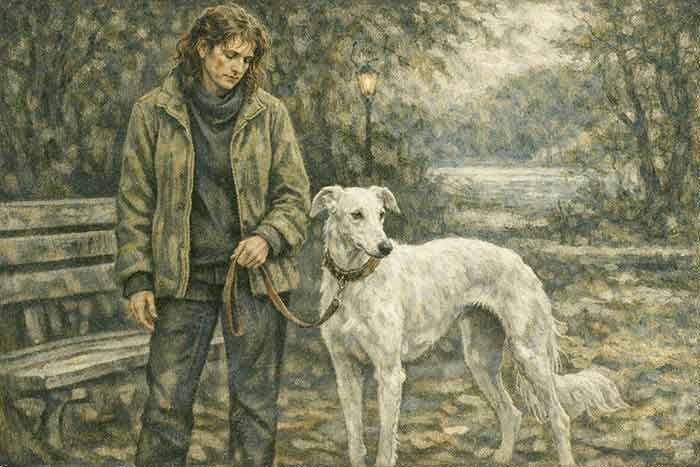
    One morning Alice saw a woman she had never seen before. The woman was standing near the park with a dog. The dog was white and very thin. It stayed close to her legs. The woman did not walk or sit. She only stood and looked at people as they walked past.

    There was something different about her, and Alice didn’t know what it was.

    The first morning, Alice told herself the woman was new. People came and went. Alice walked past her and did her job. When she looked back, the woman was still there, in the same place.

    The second morning, the woman stood there again. Same place. Same clothes. Same dog. Alice watched other people walk past her. No one stopped.

    On the third morning, Alice stopped near the woman. People walked past them.

    Alice asked a man with a dog, “Do you see that woman?” She pointed.

    The man looked and said, “I see no one.” He walked on.

    Alice asked a woman who was running next. “Is someone standing there?”

    The woman looked at the space and said, “No.” She ran away.

    Alice asked a woman on a bicycle next. “Do you see a woman here?”

    The woman and man looked where Alice pointed. “No,” she said. “There is no one there.” She cycled on.

    Alice asked a young woman with a small dog. “Can you see someone here?”

    The woman looked at Alice like she was crazy. “No,” she said. “I see nothing.” She walked away.

    Alice felt cold.

    She looked back at the woman. The woman was still there with the dog.

    “They cannot see you,” Alice said.

    “No,” the woman said. “They never can.”

    “Why can I see you?” Alice asked.

    “There is always one person,” the woman said.

    The dog stayed close to the woman’s legs.

    “I stand here every morning,” the woman said. “I cannot leave.”

    “Can I stop seeing you?” Alice asked.

    “No,” the woman said. “You saw me once. Now you will always see me.”

    The woman touched Alice’s arm. Her hand was cold.

    Nothing changed.

    The next morning, Alice came back to the park. The woman was there. Same place. Same dog.

    Days passed. Then weeks.

    People walked past the woman every day. They talked and laughed. No one saw her.

    Only Alice did.

    Now Alice walks dogs every morning. She walks the same way and comes to the same place.

    The woman is always there.

    Alice is the only one who can see her.

    📒 Key vocabulary

    • stood (stand, stood, stood) – be on your feet, not sitting or walking
    • past – by or near something
    • pointed (point, pointed, pointed) – indicate something with your finger
    • cycled (cycle, cycled, cycled) – move on a bicycle
    • crazy – silly or strange, not thinking normally
    • stayed (stay, stayed, stayed) – remain in the same place
    • leave – go away from a place

    🤔 Comprehension quiz

    How much of this story did you understand? Test yourself with this easyEnglish quiz!

  • New Year’s Eve

    New Year’s Eve

    British accent

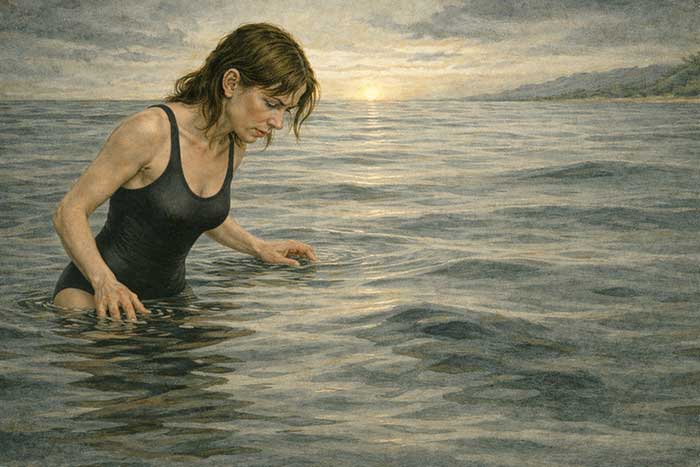
    It was New Year’s Eve. Anna was alone in her small flat. All her friends were with their partners. They sent Anna messages on their phones. The messages had photos, smiles, and happy words. Anna looked at the messages, but she was too sad to answer. She felt different from her friends because she didn’t have a partner.

    The flat was very quiet. Outside, people talked and laughed in the street. Some people were already having a party. Inside the flat, Anna heard only the clock on the wall. Tick, tick, tick. She walked to the window and looked outside. Then she walked back to the kitchen. The air in the flat felt cold and empty.

    Anna tried to read. She normally loved books, but tonight, she could not read. She read the same page again and again. Then she turned on the TV. A show was on, but it was boring. She turned it off. She tried to listen to music, but the songs made her feel sad.

    After some time, Anna felt hungry. She looked at the clock. It was late. She did not want to cook. Cooking for one person felt boring. She picked up her phone and ordered a pizza. It was easy and fast. She hoped the pizza would make the evening better.

    After a while, the doorbell rang. Anna opened the door. A man stood outside with a pizza box in his hands. He wore a red jacket. Cold night air came into the flat.

    “Pizza for you,” the man said.

    “Yes, thank you,” Anna said. She paid him and took the pizza box. Then she closed the door.

    Suddenly, Anna heard a loud noise outside. She opened the door again and saw the pizza man. He was standing next to his bicycle. “Is there a problem?’’ she asked.

    “My bicycle is broken,” he said. “I cannot ride it.”

    Anna looked at the dark street. It was quiet now. She thought for a moment.

    “You can come inside,” she said. “It is warm here.”

    The man looked surprised, but he smiled. “Thank you,” he said. “My name is Leo.”

    “I’m Anna,” she said.

    They went into the kitchen and sat at the small table. Anna opened the pizza box. The pizza looked delicious.

    “Do you want some pizza?” Anna asked.

    “Yes, please,” Leo said.

    They ate slowly. At first, they spoke only a little. Then they talked more. Leo said he worked many nights. New Year’s Eve was always very busy for him. Anna said she worked in a shop and liked quiet days.

    “My friends are all with their partners tonight,” Anna said. “I feel very alone.”

    “I understand,” Leo said. “I feel alone sometimes too, even when I meet many people.”

    They talked about music, work, and the new year. Anna felt warm and relaxed. Time passed quickly.

    At midnight, Anna stood by the window, looking at the snow outside. Leo stood next to her.

    “Happy New Year,” Leo said.

    “Happy New Year,” Anna said.

    Later, Leo checked his bike again. “It works now,” he said.

    At the door, Leo stopped. “Can I see you again?” he asked.

    Anna smiled. “Yes,” she said.

    Leo left. Anna closed the door. She was alone again, but she did not feel sad. The new year was here, and she was excited to see what it would bring.

    📒 Key vocabulary

    • New Year’s Eve – the evening of December 31st, the last night of the year
    • alone – with no other people
    • flat – an apartment
    • partners – husband, wife, boyfriend or girlfriend
    • outside – not inside
    • empty – with nothing inside
    • boring – not interesting
    • ordered (order, ordered, ordered) – ask for food to be brought to you
    • doorbell – a bell you ring at a door
    • broken – not working
    • warm – not cold
    • slowly – not fast
    • relaxed – calm and comfortable
    • excited – happy about something that will happen in the future

    🤔 Comprehension quiz

    How much of this story did you understand? Test yourself with this easyEnglish quiz!
    See also

    • Auld Lang Syne
      Jonathan Taylor counts down to midnight on New Year’s Eve to the tune of Auld Lang Syne
  • The Noisy One

    The Noisy One

    Paul was a man who liked to talk. He lived in a small apartment in the city with many other people. Every day, Paul talked in a loud voice. He talked in the morning. He talked in the evening. He talked when people were exhausted. He even talked when people were trying to watch television. People in the house called him “the noisy one’’ because he was never quiet.

    Paul liked to talk, but he also liked something else. He liked to have the last word. When someone spoke to him, he always spoke again. When someone said, “Please be quiet,” Paul said, “I am quiet!” He always needed to say something more.

    One morning, Paul went to the small shop near his house. He wanted some bread. Many people were waiting in a line. The shop was very quiet. People did not talk. They only waited.

    Paul did not like quiet places. He walked into the shop and said, in a very loud voice, “Hello, everyone! Good morning!” People looked at him, but Paul did not stop. He said, “It is a fine day! Don’t you think so?”

    When the shop worker said, “Next, please,” two people moved. But Paul spoke very fast and very loud. “I am next!” he said. “I am always next.” The worker looked tired, but she gave him the bread.

    Later, Paul went to work. He worked in a small office. The office was usually a quiet place. People worked on computers. People spoke in soft voices. But Paul spoke loudly. When his boss said, “Paul, please speak more quietly,” he said, “I am not loud. I am OK. I am happy!” He spoke again before the boss could say anything more.

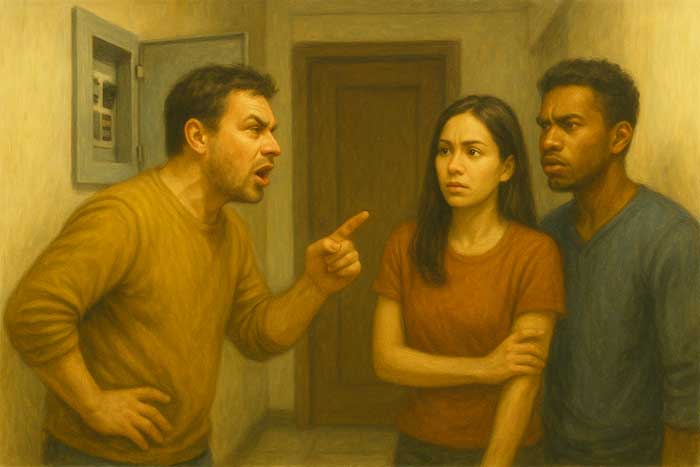
    After work, Paul went home. Some neighbours were standing in the hall. They wanted to have a small meeting. They wanted to speak about noise. When Paul arrived, he already knew what they wanted to say. He said, “Yes, yes, I know. You want to talk about noise. We can talk.”

    Mrs Brown, an older woman, said, “Paul, we—”
    But Paul spoke fast again. “Yes, I know. You think I am too loud.”

    Mr Lee tried to speak. “We just want—”
    Paul did not let him finish. “I know! I know everything,” he said.

    The neighbours looked tired. They could not speak. Paul always had the last word.

    Then something happened. Suddenly, the lights in the hall went off. Everything was dark. No one could see anything. It was very quiet.

    Paul said, “What is happening?” but no one answered. People were thinking. They needed to find the problem.

    Mrs Brown spoke in a soft voice. “Please stay calm. We need to find the electricity box. One person speaks at a time.”

    For the first time, Paul stayed quiet. He needed help. He could not see. He listened to the others. He followed their voices. Together, they found the box, and Mr Lee opened it. Soon, the lights came back.

    Everyone looked at Paul. He felt bad. He said in a quiet voice, “I am sorry. I speak too much. I do not let you speak.”

    Mrs Brown smiled. “It is OK, Paul. Just listen more.”

    Paul nodded. “I will try,” he said.

    From that day, Paul still talked, but not so loud, and not always last.

    📒 Key vocabulary

    • exhausted – very tired
    • the last word – when a person must speak again at the end of a conversation
    • spoke (speak, spoke, spoken) – to say something
    • boss – a person of authority in a workplace
    • hall – a long space inside a building
    • meeting – a time when people come together to talk about important matters
    • calm – not angry, not afraid
    • electricity – the power that makes lights and machines work
    • nodded (nod, nodded, nodded) – to move your head to show agreement

    🤔 Comprehension quiz

    How much of this story did you understand? Test yourself with this easyEnglish quiz!
  • A Different Type of Holiday

    A Different Type of Holiday

    It was the end of the summer, and Maria wanted a holiday. She had been working hard all year, and she needed a break.  

    Her friends had all taken holidays to the beach and to other countries. They sent photos of the sea, food, and big cities. They looked very happy and relaxed.

    Maria looked at the photos and felt sad. She had one week off work, but she didn’t have enough money to travel. ‘Oh dear,’ she said to herself. ‘’I guess I am going to have to spend my holiday at home.’’

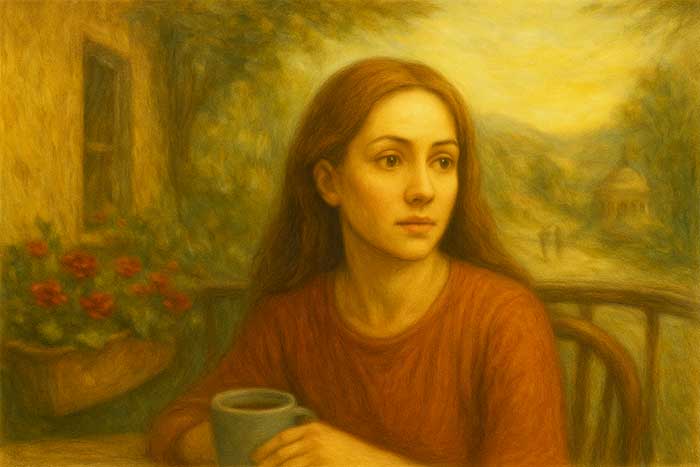
    On Saturday morning, Maria woke up early. The sun was hot and the sky was blue. She made a cup of coffee and sat on her balcony. She listened to birds and watched people in the street. She felt calm. “This is nice,” she said to herself.

    After breakfast, Maria cleaned her flat. She played music and sang a little. She washed the floor and made the bed. When she finished, everything looked nice and clean.

    Then she made a sandwich and some tea. She sat down and read a book. The book was old, but she enjoyed it. She read for the whole afternoon.

    In the evening, Maria took a bath. She used soap that smelt of flowers. The water was warm, and she closed her eyes and relaxed. After the bath, she called her sister. They talked for a long time and laughed.

    “You sound happy,” her sister said.
    “Yes,” Maria said. “I am happy. I am having a holiday at home.”

    On Sunday, Maria went to the park. She wore a hat and dark glasses. Many people were there. Some played games. Some ate food with friends.

    Maria bought an ice cream and sat under a tree. The wind was soft, and she watched the clouds. She smiled. It was a simple day, but a pleasant one.

    In the afternoon, she cooked pasta with tomato sauce and cheese. She put a flower on the table and played soft music. She ate slowly and enjoyed the food.After dinner, she watched a movie. It was an old love story. She laughed and cried a little. Then she made a cup of tea and went to bed.

    On Monday morning, Maria went to work. Her friends asked, “Where did you go on holiday?”

    She smiled and said, “I stayed at home.”

    They looked surprised.

    Maria laughed. “It was very nice,” she said. “I rested. I read. I did nothing. It was absolutely perfect.”

    📒 Key vocabulary

    • balcony – small space outside a flat
    • flat – a home inside a building
    • bath – washing your body in water
    • smell (smell, smelt, smelt) – have the scent of
    • pleasant – nice and enjoyable
    • rest (rest, rested, rested)– stop working to relax

    🤔 Comprehension quiz

    How much of this story did you understand? Test yourself with this easyEnglish quiz!

  • The Last Stop

    The Last Stop

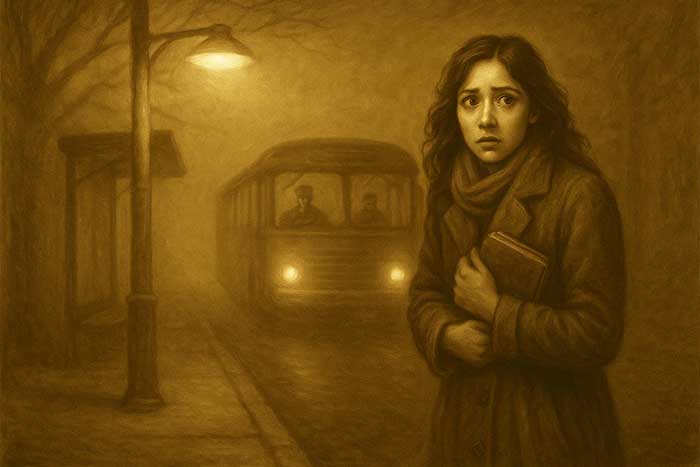
    It was a cold autumn night. The wind was loud and the streets in the city were empty. Maria waited at the bus stop for her bus to come. It was very late, and she wanted to go home. She looked at her phone, but it didn’t work. With nobody to talk to, she felt scared and alone.

    Maria looked down the road. No people. No cars. There were only dark buildings and the sound of the wind. Finally, she saw lights far away. The bus was coming and she felt better.

    When the bus stopped, the doors opened with a loud sound. The driver was an old man. He looked tired. “Good evening,” Maria said. The man didn’t answer. He only looked at her for a second. Maria got on and sat near the back.

    The bus was almost empty. Only one man was there. He wore a dark coat and sat near the middle. He looked out of the window and didn’t move. Maria wanted to read her book, but she couldn’t. The bus was too quiet.

    They passed shops and houses, but they were all closed. The man in the coat didn’t move. The driver didn’t speak. Maria started to feel nervous. She told herself, “It’s okay. I’ll be home soon.”

    At the next stop, no one got on. No one got off. The bus kept going. Maria looked out the window again. She didn’t know the streets. They were going the wrong way.

    She stood up and walked to the front. “Excuse me,” she said. “Does this bus go to Maple Street?” The driver said nothing. He looked straight ahead. “Sir?” she said again. No answer.

    Maria turned. The man in the coat was now sitting very still. His eyes were open. He didn’t move. He looked cold and white.

    Maria felt her heart beat fast. “Driver!” she shouted. The bus did not stop. The road outside was empty.

    Then the driver spoke. His voice was low. “This is the last stop,” he said. “No one gets off after this.”

    The bus turned down a small road. It was very dark. Maria looked out the window. She saw only trees and fog. She tried her phone again, but it still didn’t work. The bus kept going slowly into the dark night.

    Outside, the wind became louder. Inside, nobody spoke.

    📒 Key vocabulary

    • bus stop – the place where you wait for a bus
    • scared – afraid
    • alone – with no other people near you
    • tired – when you need to rest or sleep
    • empty – without people inside
    • nervous – a little afraid or worried
    • fog – thick white mist that makes it hard to see

    🤔 Comprehension quiz

    How much of this story did you understand? Test yourself with this easyEnglish quiz!
  • Table for One

    Table for One

    Maria liked to eat alone. Every Friday evening, she went to the same café near her office.

    It was small, with simple chairs and small tables. She always sat by the window so she could see the people walk by.

    She liked to read her book and drink her coffee in peace. It was her quiet time after work when she didn’t need to talk to anyone.

    The waiters all knew her. “Table for one?” they always asked when she walked in the door.

    One Friday evening, the café was very busy. There were people at every table. They were talking and enjoying their food. Maria sat at her table by the window and tried to read. It was hard because there was so much noise.

    Then the door opened. A man came into the café. He looked around for a table, but they were all occupied. The only place available was at Maria’s table.

    The waiter said to the man, “You can sit here, with Maria.”

    Maria closed her book.
    “No,” she said. “This is my table.”
    She did not want a stranger near her.

    The man looked at her. He had kind eyes and a nice smile.
    “It is only for tonight,” he said.

    Maria looked away.
    “I always sit alone,” she said.

    The café was very full, and the man was still standing. He looked very tired.

    Maria looked at him again and started to feel bad. She put down her book and moved her bag off the chair.
    “Fine. You can sit here,” she said.

    The man smiled.
    “Thank you. My name is Daniel.”
    “I’m Maria,” she said.

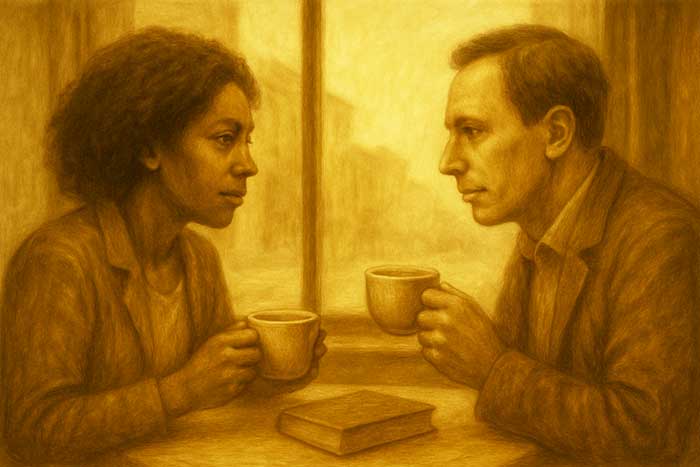
    The waiter gave them menus, and they ordered cake and coffee. For a few minutes, they were quiet. Maria looked out of the window, but she saw Daniel in the glass. He was smiling.

    Daniel spoke.
    “Do you come here often?”
    “Yes. Every Friday”, Maria said.
    “I usually eat at home,” Daniel said. “But tonight, I wanted something new.”

    Maria did not answer. Then Daniel spoke about books. Maria was suddenly interested. She loved to read.
    “What books do you like?” she asked.
    Daniel told her while Maria listened and smiled. They began to talk more.

    Time passed quickly, and the cake tasted better than usual. Maria forgot about her book and talked to Daniel.

    When they finished eating, Daniel stood up.
    “Thank you, Maria,” he said. “I enjoyed talking to you.”

    Maria felt warm inside.
    “Yes,” she said. “I enjoyed talking to you too.”

    Daniel looked at her.
    “Maybe next Friday you could ask for a table for two?”

    Maria looked at him.
    She smiled.
    “Yes,” she said. “I’ll do that. I’ll ask for a table for two.”

    📒 Key vocabulary

    • waiters – people who serve you in restaurants and cafes
    • busy – active, with many people in it
    • occupied – in use
    • available – free to sit at
    • stranger – a person you don’t know
    • kind – good and friendly
    • alone – without other people
    • tired – when you need rest or sleep

    🤔 Comprehension quiz

    How much of this story did you understand? Test yourself with this easyEnglish quiz!
  • The Chair

    The Chair

    Life had changed a lot for Tom. And not in a good way. Just a few months before, he lived in a big house with a garden and many rooms. He was very happy there. When he wasn’t at home, he liked to travel, so he took many holidays each year.


    Then one day something terrible happened – he lost his job. With no money coming in, he couldn’t pay for the house anymore and he couldn’t take any holidays. He had to move to a flat with only one small room. It had no window and no garden. It was dark and cold.

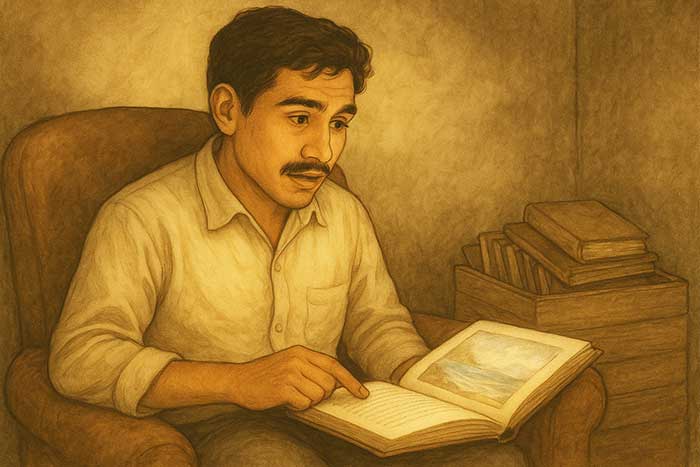
    Tom was too poor to buy new furniture, so he had no bed to sleep in. The only furniture in the room was an ugly old brown chair. Next to it was a box full of old books.

    Tom looked at the chair and the box. He felt sad and alone. He wanted his old life back. More than anything, he wanted to travel. He wanted to see the sea, the mountains, and big cities. But he had no money now.

    That night he sat in the chair. He opened one of the books. He saw a picture of the sea. Blue water, white sand, and many pretty trees. Feeling sad, Tom touched the picture with his finger.

    Suddenly, the flat was gone. He was on a beach with the warm sun on his face. He heard the sound of waves. He smelt salt in the air. For the first time in weeks, he smiled.

    Then, in a moment, he was back in the chair. The book was open on his legs. His finger was still on the picture.

    Tom’s eyes were wide. Was it real? Was it magic? He turned the page. Now he saw a city. Bright lights, tall buildings, and many cars. He touched the picture.

    Suddenly, he was on the street in that city. People walked past him. He could hear music and voices. He smelt food from shops. The city was full of people and lights. It was wonderful.

    Then he was back again in the chair.

    Every night Tom had more adventures. He touched mountains, rivers, and forests in the books, and the chair carried him to these places.

    Months passed, and Tom found a new job. At last, he had money to buy furniture. When men came to deliver new furniture, they saw the old chair.

    “Shall we take this away?” one man asked.

    Tom looked at the chair. He smiled. “No. Take the new things back. This chair is all I need.”

    That night, Tom sat in his chair, opened a book, and touched a picture… A moment later, he was off on another adventure. He did not need holidays anymore—the chair gave him all the adventures he wanted.”

    📒 Key vocabulary

    • terrible – very bad
    • flat – a set of rooms for living in, an apartment, usually in a building with many homes
    • furniture – things like chairs, tables, and beds in a house or room
    • suddenly – quickly and without warning
    • waves – rising and falling water in the sea
    • wonderful – very good; making you happy
    • adventures – exciting trips or experiences in new places
    • deliver (deliver, delivered, delivered) – to bring something to someone’s house

    🤔 Comprehension quiz

    How much of this story did you understand? Test yourself with this easyEnglish quiz!
  • A Mouse in the House

    A Mouse in the House

    It was a cold winter evening, and the Smith family were eating dinner. They were talking about their day when, suddenly, they saw something run across the floor. ‘Aaaaaaah!’ Mrs Smith shouted, jumping off her chair. “There is a mouse in the house! Help!”

    Mr Smith jumped on a chair. “Keep it away from me!” he cried. Mrs Smith jumped onto the table. Anna, their daughter, screamed, “Get it out!” then ran out of the room. Everyone was afraid.

    Only young Jamie was not scared. He was eight years old and loved animals. “Don’t hurt it!” he said. “It’s only a little mouse. It will not hurt us.”

    But Mr Smith shook his head. “We must take it away. Mice eat food and make a mess.”

    That night, the family put a trap in the kitchen. But Jamie took the trap away. He put a piece of cheese on the floor instead. The mouse came out, took the cheese, and ran back to its hole. Jamie smiled.

    The next day, Mrs Smith lost her ring. It was under the table. She could not get it. Then the little mouse came out and pushed the ring closer with its nose. Mrs Smith picked it up. “Thank you,” she said softly.

    Later that week, Anna was doing her homework. The wind from the window blew her papers onto the floor. The mouse came out and moved the papers back with its tiny feet. Anna opened her eyes wide. “Did the mouse help me?” she asked.

    Even Mr Smith began to like the mouse. One evening, he left small pieces of bread on the floor after dinner. In the morning, the pieces were gone. It had eaten them. Mr Smith laughed. “It helps to clean!” he said.

    Day by day, the mouse did little things. It pushed things across the room, moved pencils, and ate food that fell on the floor.

    One evening, Mrs Smith said, “Maybe we don’t need to send the mouse away.”

    Jamie clapped his hands. “See? I told you it could be our friend!”

    From then on, the Smith family gave the mouse a little cheese every night. They were not afraid anymore. The mouse had a home, and the family had a new friend.

    📒 Key vocabulary

    • mouse – a very small animal with a long tail
    • shouted (shout, shouted, shouted) – speak in a loud voice to show fear or anger
    • screamed (scream, screamed, screamed) – make a very loud, high sound
    • hurt (hurt, hurt, hurt) – feel pain in the body
    • mice – more than one mouse
    • mess – things are not tidy or clean
    • trap – something used to catch an animal or person
    • pushed (push, push, push) – move something by pressing on it
    • blew (blow, blew, blown) – make air move, like with your mouth or the wind
    • clapped (clap, clapped, clapped) – make a noise by hitting your hands together to show approval

    🤔 Comprehension quiz

    How much of this story did you understand? Test yourself with this easyEnglish quiz!
  • The Picnic

    The Picnic

    It was Saturday morning, and Ed had special plans. Today was the day he was going to ask Bella to marry him.

    He decided to ask the question during a picnic in the park. He put bread, cheese, fruit, wine, and a blanket in a basket along with two small cakes for dessert.

    Then, before he left the house, he put the ring in his pocket.

    He walked to Bella’s house and told her he was taking her somewhere special. When she asked where they were going, he told her it was a surprise.

    Ed and Bella walked for five minutes until they came to a park. There were not many people there, and it was very quiet. Bella was happy when she saw the green grass and the tall trees. She smiled when Ed put the blanket on the ground.

    ‘’What a wonderful idea. I love picnics.’’ She said happily. ‘’Thank you, Ed.’’

    Ed took out the food, and they started to eat and drink. The afternoon was calm. Birds sang, and the sun was warm. Ed felt excited. He wanted to give Bella the ring, but he waited for the right time.

    Suddenly, the sky went dark. Big grey clouds covered the sun. The wind moved the trees, and the birds flew away.

    Next, there was a loud crash of thunder, which made Bella jump with fright. Rain began to fall heavily, and they started to feel cold. The blanket and the food were now wet. Their picnic in the park was ruined.

    The wind became stronger, and the rain got even heavier. A big stick fell from a tree and hit the ground close to them. Bella was afraid. Ed held her hand, and they ran quickly towards a tall tree.

    It was not safe under the tree, but it was the only dry place. Rain hit the leaves above them. Water ran down their faces. The storm was all around.

    Ed looked at Bella. This was not the plan. He wanted a day with sun, flowers, and peace. Instead, there was rain, noise, and fear. But he knew he could not wait.

    He put his hand in his pocket and took out the small ring.

    ‘’Bella, I am sorry about the picnic, but I love you so much. I want you to be my wife. Will you marry me?’’
    ‘’Yes!’ said Bella immediately. ‘’I love you too, Ed. Nothing would make me happier.’’

    Ed and Bella were wet and cold, but they were happy to be together.

    Later, when the rain stopped, they walked home hand in hand. The park was full of water, but they were happy. The picnic had been ruined, yet the day was one they would never forget.

    📒 Key vocabulary

    • plans – ideas for what you want to do in the future
    • picnic – a meal you eat outdoors
    • blanket – a piece of cloth you sit or sleep on
    • basket – a wooden container
    • pocket – a small bag in your clothes for carrying things
    • clouds – white or grey shapes in the sky that bring rain
    • thunder – a loud noise that you hear during rainstorms
    • fright – fear
    • ruined – destroyed
    • stick – a small piece of wood from a tree

    🤔 Comprehension quiz

    How much of this story did you understand? Test yourself with this easyEnglish quiz!
  • The New House

    The New House

    Sue and Greg were excited. They had just moved into a new house.

    “We are going to be so happy here,” said Sue. ‘’I feel so lucky.’’

    The house was big with large windows. The garden was green with tall trees. For Sue and Greg, it was perfect.

    But one thing was strange about the house. It had been empty for a long time. The neighbours said they could not remember the last people who lived there.

    Some said it had been empty for ten years.  Nobody was sure.

    “Maybe they just moved away,” Sue said.
    “Yes,” said Greg. “We don’t need to worry.”

    They worked hard to make the house feel like home. They painted the kitchen, cleaned the rooms, and bought new furniture. They were very happy.

    But sometimes, Sue thought the house was too quiet. She thought she heard small noises at night.

    A step on the stairs. A door moving. When she asked Greg, he said, “It’s only the wind.”

    One rainy afternoon, Sue was cleaning the cupboard in the living room. At the back, under an old book, she found something flat. It was a photo.

    “Greg,” she called.

    Greg came quickly. They looked at the photo together. It showed a family: a man, a woman, and a child.

    But the family did not look happy. They were not smiling. Their eyes looked dark.

    “This feels strange,” Sue said.

    Greg turned the photo over. On the back, the words were written in red. The words were not small. They were big and clear.

    “You’re next.”

    Greg dropped the photo on the floor. “What is this?” he asked.

    Sue felt cold. “Is it a joke?”

    But deep inside, she knew it was not a joke.

    They stood in silence. The room felt colder. The light outside grew darker.

    “Maybe we should leave,” Sue whispered.

    “No,” Greg said. ‘It’s just an old photo. Nothing more.”

    But that night, Sue could not sleep. She sat in bed, listening. The house was too quiet.

    Then she heard it: a step on the stairs. Slow. Heavy. Another step. And another.

    She touched Greg’s arm. “Do you hear it?” she asked.

    This time, Greg was awake. “Yes,” he said.

    They listened together. The steps came closer. Up the stairs. Down the hall. Stopping at their door.

    Slowly, the door moved.

    Greg jumped out of bed and opened it. But the hall was empty. Only the dark and the sound of rain on the windows.

    He turned back to Sue. “See? Nobody is there.”

    But Sue was looking at the floor. Her face was white.

    By her feet was the photo. The same photo she had found in the cupboard. But now, the picture had changed. The family was gone. The photo showed only two people: Sue and Greg.

    Terrified, Greg turned the photo over.

    The words were new. They said, “Now.”

    The light went on and off. The door closed loudly.

    And the house was quiet again.

    📒 Key vocabulary

    • excited – very happy and full of energy
    • empty – with nothing inside
    • furniture – things in a house like chairs, tables, and beds
    • step – the sound or movement when someone walks
    • cupboard – a piece of furniture with doors for keeping things
    • joke – something said to make people laugh
    • whispered – spoke very softly
    • awake – not sleeping
    • hall – a long space inside a house or building
    • terrified – very frightened

    🤔 Comprehension quiz

    How much of this story did you understand? Test yourself with this easyEnglish quiz!