
Advertisement

Home » B1 » Page 4

Level: B1

  • The Locked Door

    The Locked Door

    It was a dark and stormy night when Mark arrived at the house. Rain hit the windows like small stones, and the wind made the trees outside shake and groan. Mark had never been to this house before. His uncle had died the month before and left it to him in his will. Mark didn’t know much about his uncle, only that he lived alone and rarely spoke to anyone.

    The house stood alone in the countryside, far from the village. Mark parked his car and quickly ran to the door. He used the key and opened it. The door creaked loudly. Inside, it was cold, dark, and quiet. Dust covered the furniture, and cobwebs filled the corners. Strange paintings of people with blank faces were on the walls. The air smelt of old paper and wet wood.

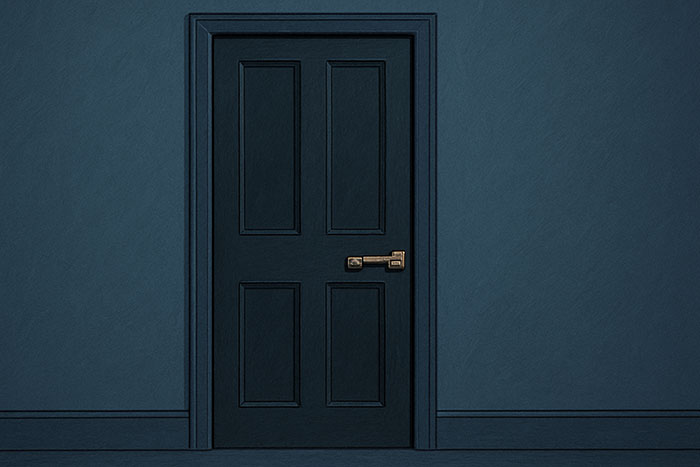
    Upstairs, Mark found three bedrooms and a small study. But one door at the end of the hallway caught his attention. It was black and had a heavy lock. He tried all the keys, but none worked. He leaned closer.

    Thump.

    Something moved inside. Or was it just his imagination?

    That night, Mark couldn’t sleep. The wind howled, and strange sounds came from upstairs—soft scratching, whispers, and quiet knocks. He tried to stay calm and told himself it was only the old house making noises. But he didn’t believe it.

    The next day, he went to the village and asked an old woman at the small shop about the house.

    “The locked room?” she said with a frown. “Your uncle warned everyone never to open that door. He believed something evil lived in that room.”

    Mark laughed nervously. “Do you mean a ghost?”

    But the woman didn’t smile. “Worse than a ghost.”

    That night, the noises came back—louder and faster. Mark couldn’t take it anymore. He grabbed a torch and an umbrella for self-defence. Just after midnight, he went upstairs. His heart was beating fast. The black door was shaking as though something was trying to get out.

    He forced it open. The room inside was freezing cold. A single chair stood in the centre, facing the wall. On it sat a tape recorder. Mark stepped inside and pressed play.

    His uncle’s voice spoke: “If you hear this, it means I’ve failed. It’s awake. Do not stay. Leave the house now.”

    Suddenly, the door slammed shut behind him. Mark turned around. In the shadows, something moved. Something with glowing red eyes.

     And then—the lights went out.

    📒 Key vocabulary

    • groan – make a sound of deep unhappiness
    • will – a legal document that says what is to happen to somebody’s money and property after they die
    • warned – to have told someone about a possible danger or problem in order to prevent harm
    • slammed (shut) – closed loudly with force
    • glowing – shining brightly

    🤔 Comprehension quiz

    How much of this story did you understand? Test yourself with this easyEnglish quiz!
  • The Mirror in the Attic

    The Mirror in the Attic

    Lena was tired of city life and her boring office job. So, when her cousin asked her to look after his pets for a year in his cottage in the countryside, she accepted his offer right away. She gave up her room in the flat she shared in London, packed her things, and took the train north to the quiet village of Stonely.

    Lena soon settled into village life and enjoyed the company of the cats. But the silence of the cottage house was too quiet—unnaturally quiet. The wind whispered through cracks in the wooden walls, and at night the floorboards seemed to groan under invisible footsteps. She wanted peace, but now she wasn’t sure if she was truly alone.

    One evening, Lena decided to go up and check. She climbed the wooden stairs slowly. Each step made a loud creak. When she opened the attic door, the cold air hit her face. The room was dark and full of old furniture and boxes.

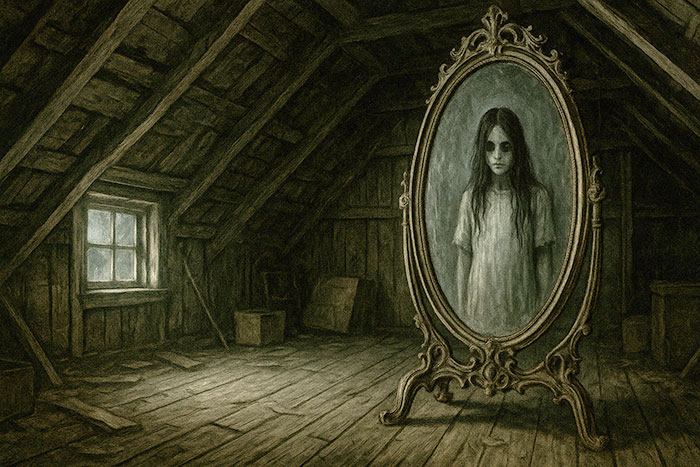
    In the corner, she saw a large mirror. It was tall, with a black wooden frame. The glass was dirty, but she could still see her reflection. As she looked into it, something felt strange. Her reflection didn’t move the same way she did. When she raised her right hand, the reflection raised its left.

    Lena stepped back, confused.

    “That’s not possible,” she whispered.

    She turned off the light and left the attic, trying to forget about the mirror. But that night, she couldn’t sleep. She felt like someone was watching her.

    The next day, she returned to the attic. The mirror was still there. This time, she cleaned the glass to see better. As she wiped it, the reflection smiled — but Lena didn’t. She froze. The reflection moved on its own.

    Suddenly, the attic door slammed shut. The lights flickered. Lena ran to the door, but it wouldn’t open. Behind her, the mirror started to shake. She turned around and saw the reflection reaching out from the glass.

    “Help me,” it whispered in her voice.

    Lena screamed. The reflection pulled harder, trying to come through. Its eyes were black, and its smile was wide and evil.

    Then, everything went dark.

    ***

    When the police came days later, they found the attic door open. The mirror stood quietly in the corner. But Lena was gone.

    In the glass, if you look closely, you can still see her. She’s standing there, with black eyes and a silent scream on her face.

    And sometimes…the mirror smiles.

    📒 Key vocabulary

    • attic – the space or room just below the roof of a house.
    • creak – to make a sharp, high sound, usually when something is old or moves slowly.
    • reflection – an image that you can see in a mirror or on a shiny surface.
    • whisper – to speak very quietly, using the breath but not the voice.
    • slam – to close with a loud noise or force.

    🤔 Comprehension quiz

    How much of this story did you understand? Test yourself with this easyEnglish quiz!
  • The Unexpected Guest

    The Unexpected Guest

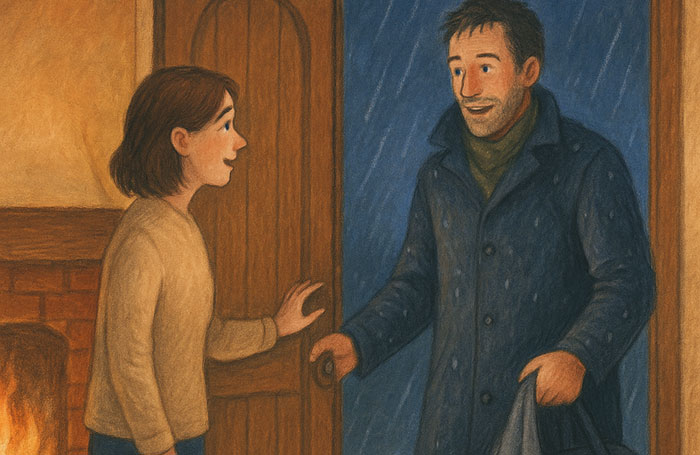
    It was a cold, rainy evening in November. Anna was sitting by the fire with a cup of tea when someone knocked at the door. She wasn’t expecting anyone. Slowly, she walked to the door and opened it.

    A tall man stood outside. He was wet from the rain and looked tired.
    “Good evening,” he said. “I’m sorry to bother you. My car broke down, and there’s no phone signal. Can I wait here until help arrives?”

    Anna hesitated. She lived alone in a small house in the countryside. But the man looked honest, and the storm was getting worse.

    “Of course,” she said. “Come in. You must be cold.”

    The man stepped inside and smiled. “Thank you. I really appreciate it.”

    Anna gave him a towel and made another cup of tea. They sat by the fire and talked. His name was Michael. He was a writer travelling to a town nearby for a book event. He spoke kindly and told funny stories. Anna felt relaxed.

    Hours passed, but no help came. The rain didn’t stop. Anna offered him the guest room.

    “You can stay the night,” she said. “It’s too dangerous to drive.”

    “Thank you,” Michael said. “You are very kind.”

    The next morning, the sun was shining. Michael’s car was gone when Anna woke up. On the kitchen table, she found a note:

    “Dear Anna,
    Thank you for your warmth and kindness. People like you make the world better. I hope we meet again.
    — Michael”

    Under the note was a signed copy of his book. On the first page, he had written:
    To Anna, the most generous host. Thank you for reminding me of the good in people.

    Anna smiled. It was just one evening, but it made a difference — for both of them.

    📒 Key vocabulary

    hesitate – to pause before doing something, often because you are unsure or nervous.

    appreciate – to be thankful or show gratitude for something.

    generous— willing to give or share with others; kind and unselfish.

    dangerous – not safe; likely to cause harm, injury, or problems.

    relaxed – calm and comfortable; not stressed or worried.

    🤔 Comprehension quiz

    How much of this story did you understand? Test yourself with this easyEnglish quiz!
  • A Weekend in the Mountains

    A Weekend in the Mountains

    Tom and his sister, Lucy, wanted to do something different. They lived in a noisy city and felt tired of the same routine. One Friday evening, they packed their bags and drove to the mountains for a weekend escape.

    The drive was long, but the view was beautiful. Trees, rivers, and rolling hills stretched out in every direction. When they arrived at a small wooden cabin, the sun was just starting to set. It was quiet—almost too quiet.

    The cabin was simple but cozy. There was no television, no internet, and barely any phone signal. At first, Lucy complained, but Tom smiled. “Let’s enjoy the peace,” he said.

    That night, they sat by the fireplace and drank hot chocolate. Outside, they could hear the wind blowing through the trees. It was peaceful, and for the first time in a while, they felt truly relaxed.

    The next morning, they decided to go for a hike. They packed sandwiches, water, and a map, and started walking up a forest trail. The air was fresh and cool. Birds sang in the trees above them, and small animals moved quietly through the undergrowth.

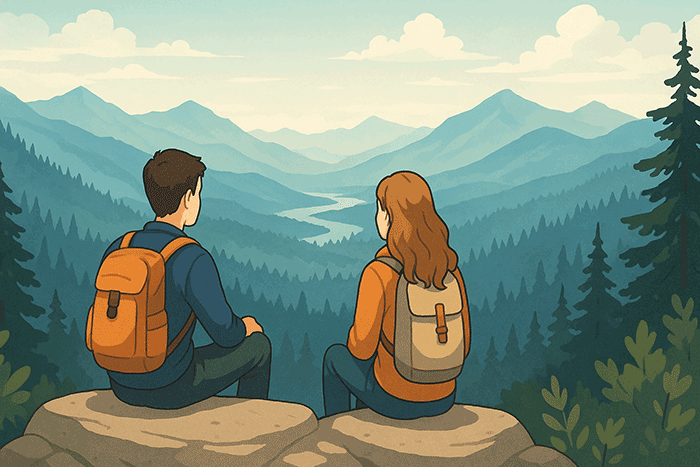
    After an hour, they reached a high point with a wide view of the valley below. It was breathtaking. They sat on a rock and enjoyed their lunch, talking and laughing together.

    Suddenly, clouds rolled in. The sky turned dark, and the wind grew stronger. “I think we should head back,” Lucy said. Tom agreed. They began to walk quickly, but soon it started to rain heavily.

    The path became muddy and hard to follow. The map got wet and tore in two. They were lost.

    “Stay calm,” Tom said. They remembered passing a large pine tree earlier and tried to find it again. After some searching, they saw it—and the trail nearby. Wet and cold, they followed it all the way back to the cabin.

    By the time they returned, the rain had stopped. They changed into dry clothes and made hot soup. As they sat by the fire again, Lucy smiled. “That was scary,” she said, “but kind of exciting.”

    Tom nodded. “Sometimes the best adventures are the ones you don’t expect.”

    The next day, the sun returned, and they spent the morning reading and resting. When it was time to leave, neither of them wanted to go.

    As they drove back to the city, Lucy said, “Let’s do this again soon.”

    Tom smiled. “Definitely.”

    📒 Key vocabulary

    cabin – A small house, usually in a rural or forest area

    cozy – Comfortable and warm

    trail – A path or track, often through a forest or mountain

    breathtaking – Very beautiful or impressive

    undergrowth – Plants, bushes, and small trees growing under larger trees

    pine tree – A type of evergreen tree with long needles

    tore – Past tense of tear; to rip or break

    muddy – Covered in or filled with wet earth

    relaxed – Calm and free from stress

    escape – A short trip away from daily routine or stress

    🤔 Comprehension quiz

    How much of this story did you understand? Test yourself with this easyEnglish quiz!
  • The Train to Brighton

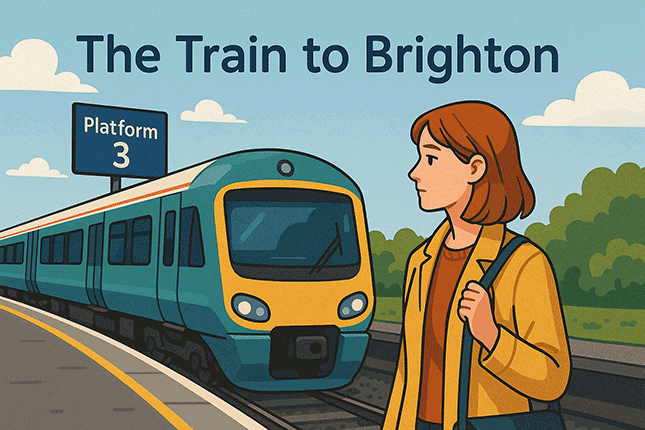
    The Train to Brighton

    Lena was running late. She had planned to catch the 9:15 train to Brighton to visit her sister, but she had overslept. When she finally reached the station, it was already 9:12.

    She ran to the ticket machine, bought her ticket, and rushed to Platform 3. Just as she reached the steps, she heard the train doors closing. With a loud sigh, she stopped and watched the train pull away.

    Lena sat down on a bench, annoyed with herself. She had really wanted to surprise her sister, who didn’t know she was coming. Now she would have to wait for the next train, which wasn’t until 10:00.

    As she waited, an older woman sat down beside her. The woman smiled and said, “Missed your train?”

    Lena laughed a little. “Yes, I did. I was too slow this morning.”

    The woman nodded. “Sometimes things happen for a reason. Maybe you were meant to catch the next one.”

    They began to talk. The woman’s name was June. She was going to visit her granddaughter, who had just started university in Brighton.

    Lena and June chatted for nearly 40 minutes. They laughed, shared stories, and discovered they had both grown up in small villages.

    When the 10:00 train finally arrived, they got on together and sat in the same carriage. By the time they reached Brighton, they felt like old friends.

    As they said goodbye, June smiled and said, “I’m glad you missed your train.”

    Lena smiled back. “So am I.”

    📒 Key vocabulary

    Word/PhraseMeaning
    running latenot on time, behind schedule
    platformthe area at a train station where you get on or off a train
    pull away(of a vehicle) to start moving
    annoyedfeeling a little angry or frustrated
    meant tosupposed to
    carriagea part of a train where passengers sit
    felt like old friendsfelt very comfortable with each other, as if they had known each other for a long time

    🤔 Comprehension quiz

    How much of this story did you understand? Test yourself with this easyEnglish quiz!